by Hunter Baker, J.D., Ph. D, Senior Fellow for the Center for Religion, Culture & Democracy • 3 minutes
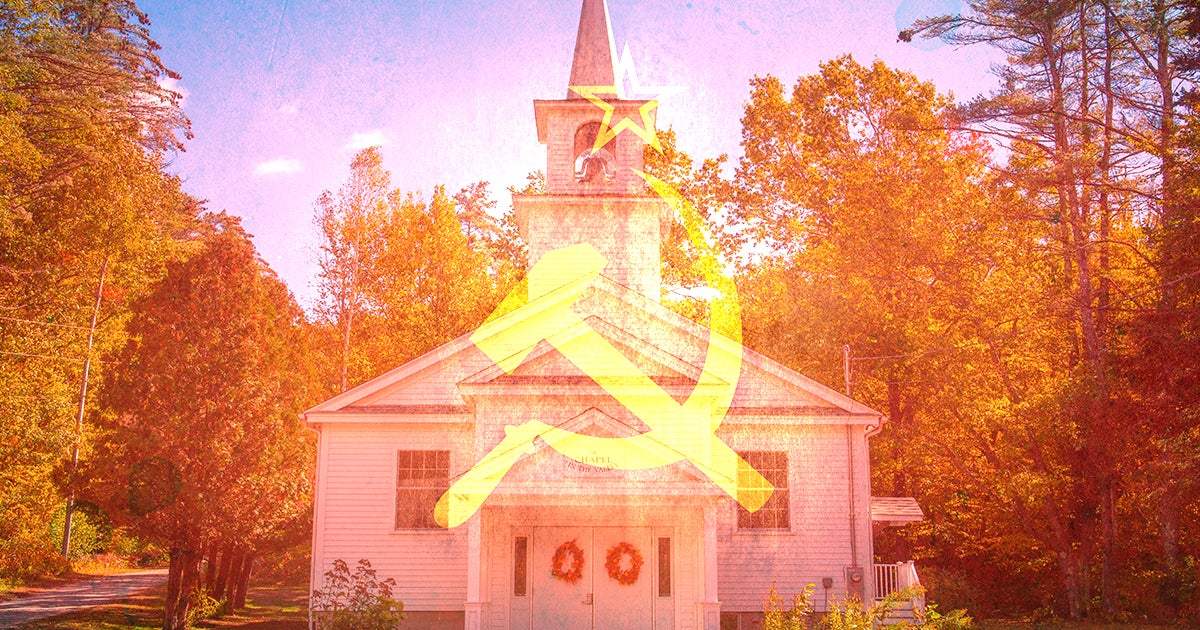
With victories and occasional near misses all over the electoral map of the United States, socialism is making a post-Cold War comeback. New York City, the center of world capitalism and financial markets, now has a socialist mayor. Elsewhere in the U.S., other socialists vie for major offices and may soon occupy several of them. If a Rip van Winkle had fallen asleep around 1991 and then awakened in 2026, he would be completely shocked to see the political currency of socialism a few decades after the fall of the Soviet Union.
The debate over socialism has always been economic at the root. Socialists have disputed the validity of the idea of private property and have generally believed that the people (via the state) should own the means of production. Today’s socialists are somewhat chastened by past failures and now mostly focus on plans of redistribution rather than public ownership. The big questions have generally revolved around whether socialism can deliver the same kinds of economic output at which capitalism has excelled.
But something else is extremely important and is all too often disregarded. While the dollars, cents, and per capita GDP angles have dominated the discussion, there are reasons to think about a more holistic impact of government control of the economy.
In his classic text Capitalism and Freedom, the Nobel Prize winner Milton Friedman noted that while you could buy almost any publication you might want in a New York City newsstand, the same was simply not true in Moscow. You could buy Pravda and The Daily Worker in Manhattan, but not The Wall Street Journal on the other side of the Iron Curtain. His point was that the Soviet control of the economy ended up leading to control of the market of ideas and the media, as well.
The totalitarian governments of the 20th century (and now the China and North Korea governments) of the 21st have total economic control and exercise authority over the rest of the spectrum of human freedom with few scruples. While North Korea’s control is more obviously blunt and brutal, it is simply true that China knocks over churches when it suits the government to show them who is in control.
But is all of this too extreme? Is it fair to compare American socialists concerned with the cost of living and economic fairness to totalitarians who repress believers in shocking ways? It may actually be less a matter of intent than one of simple social dynamics. Big government impacts religious liberty (and other rights).
First Amendment religious liberty claims have been far more common in the modern era because as government grows, it increasingly interferes with private lives because of its own priorities. Not many would have realized that the Affordable Care Act would lead to a major religious liberty crisis, but the Health and Human Services Department subsequently issued a mandate for employers to provide birth control and abortifacient drugs as part of their health care plans. The result was a clash in the courts that religious institutions (public and private) survived (thanks to the Religious Freedom Restoration Act).
We need to take into account that a government that thoroughly controls the economy and the people and organizations that operate within it is likely to control everything else. In The Road to Serfdom, Friedrich Hayek observed that the economy is the means virtually all of us use to accomplish our ends.
If the government increasingly dominates the economy (and this is clearly the ambition of socialists), then it is a near certainty it will increasingly clash with the convictions of believers. To some extent, liberty is indivisible. We may confidently tear down economic liberty only to discover that religious liberty is not far behind.