by Mike Berry, Executive Director of External Affairs & Senior Counsel • 5 minutes
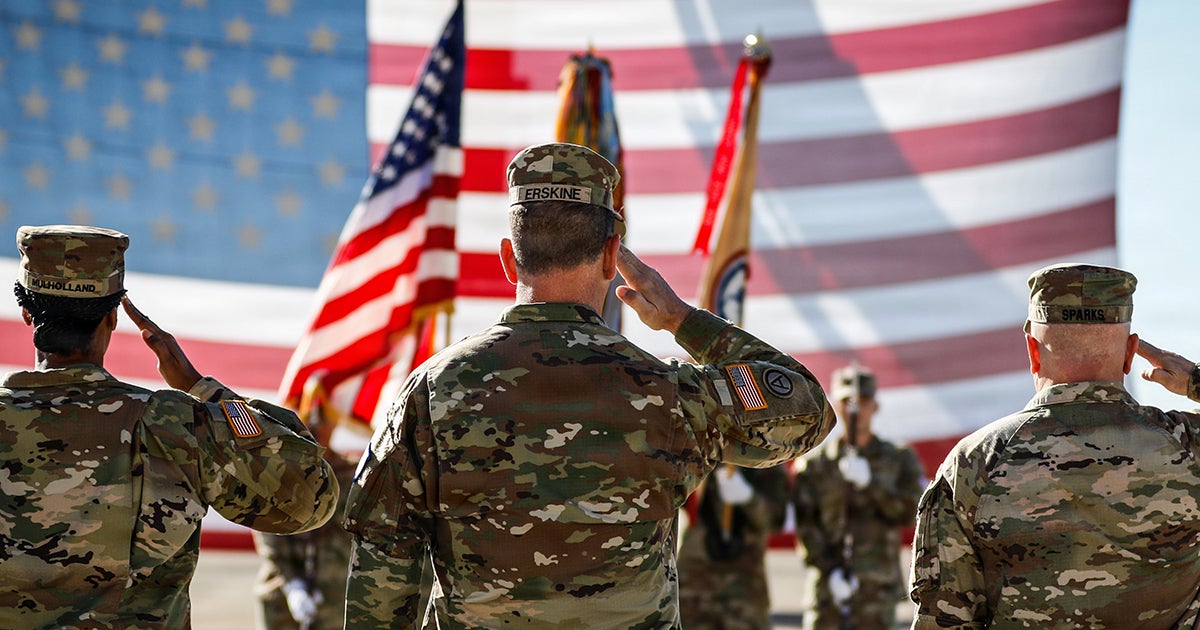
Each Veterans Day, I and many of America’s 16-18 million living veterans will undoubtedly encounter someone who says, “Thank you for your service.” For some, it can be an awkward encounter. “You’re welcome,” just doesn’t seem a fitting response.
Perhaps one way to think about it is to ask a deeper question: Why do we serve?
The obvious answer is that veterans answer the call to serve to defend our nation, protect our families, and preserve our freedom. But freedom is more than the absence of an occupying army or the ability to govern ourselves. It includes something far more personal: the freedom to live one’s life according to faith and conscience. It is the freedom to embrace a faith—or change one—without fear of government coercion.
Few stories illustrate the transformative power of that freedom more remarkably than the story of Mitsuo Fuchida.
Fuchida was the Japanese naval aviator who led the first wave of the attack on Pearl Harbor on Dec. 7, 1941. His command of the attack—he uttered the iconic phrase “Tora! Tora! Tora!”—made him one of the most recognizable figures of Japan’s military campaign against the United States. That morning, he helped usher America into the Second World War, an event that would cost hundreds of thousands of American lives and change the course of history.
Yet Fuchida’s story did not end with Pearl Harbor or even with Japan’s surrender.
In the years following the war, Fuchida encountered many accounts of American compassion toward Japanese prisoners of war. One story particularly moved him: that of Peggy Covell, an American missionary whose parents had been killed by Japanese soldiers in the Philippines. Despite this personal tragedy, Covell showed incredible mercy and grace to Japanese prisoners.
Then Fuchida encountered the testimony of Jacob DeShazer, an American airman who had participated in the Doolittle Raid against Japan in 1942. DeShazer was captured by the Japanese who badly mistreated and tortured him. Miraculously, DeShazer became a Christian during his captivity. After the war, he returned to Japan—not as a soldier seeking retribution, but as a missionary seeking to share the Good News he had received while in prison.
DeShazer’s testimony led Fuchida to obtain a Bible and read for himself the account of Jesus Christ’s life and death. There, he encountered Jesus’ words as he was tortured and killed: “Father, forgive them; for they know not what they do.”.
On April 14, 1950, Fuchida accepted Christ and became a Christian. The man who had once led an attack against America became an evangelist who traveled the world sharing the Christian message. It is a remarkable story of forgiveness and redemption. But it is also a story about freedom.
Fuchida’s transformation was not the product of military conquest, political compulsion, or government decree. No army could command his conversion. No government could require his conviction. His change came through the testimony of people whose faith had compelled them to extend grace even to those who had been their enemies.
That is freedom. That is why we fight.
The freedom to believe is among the most fundamental freedoms a person can possess. It concerns not simply what we do, but what we understand to be true; not merely how we live, but what gives our lives meaning. Religious freedom recognizes that matters of faith and conscience cannot be settled by elections, important as they may be.
Our Constitution reflects that understanding. The First Amendment protects the free exercise of religion. And that protection belongs to all Americans.
Across our country, questions about religious liberty in schools, the workplace, the military, and public life continue to test our commitment to the First Amendment. Too often, religious liberty is treated as something that belongs exclusively behind the walls of a home or house of worship. But the Constitution does not require Americans to leave their faith at the door of public life. Nor does it require those who serve to forfeit faith the moment they don the uniform.
Indeed, our service members sacrifice many freedoms to serve, but religious freedom is not one of them.
For veterans, this principle should resonate deeply. Military service is an oath to support and defend the Constitution—not an oath to any particular political party, administration, or prevailing cultural ideology. The freedoms protected by that Constitution are the very freedoms that give our national sacrifice its meaning.
Mitsuo Fuchida’s life reminds us that even the deepest divisions between people need not be permanent. A man who once viewed Americans through the lens of war came to embrace a faith introduced to him through the compassion of Americans he might otherwise have regarded as enemies. His story illustrates the power of conviction freely chosen and the extraordinary hope that emerges when people are free to follow their conscience.
This Veterans Day, we should remember those who fought, those who fell, and those who continue to serve. But we should also remember why their service matters. We fight not simply for the right to occupy our own land or determine our own government. We fight to preserve a nation in which people are free to think, speak, worship, and live according to their convictions.
Religious freedom is not a peripheral feature of American liberty. It is at its very heart.
And it is a freedom worth fighting for.