County Jails and Fines Amish
For Living in Accordance with Their Faith
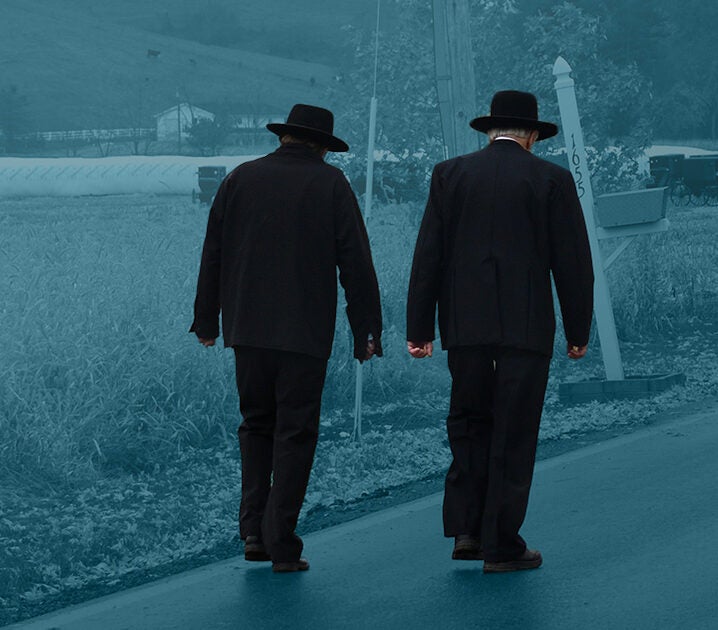
Mille Lacs County in Minnesota fined and jailed members of two Amish congregations.
In 2022, the county moved its building-code application process completely online and refused to make any accommodations for several months.
After reinstating paper forms, the county charged a $50 fee for those applications, which almost exclusively affected the Amish. The county also refuses to issue permits unless the Amish compromise their religious beliefs to satisfy modern requirements.
Many in the community have faced civil and criminal charges after they proceeded to build their homes and businesses. One member was even convicted and jailed.
“The county is clearly discriminating against the Amish, refusing to provide means of religious accommodation,” said First Liberty Senior Counsel Ryan Gardner. “The Amish merely want to provide for their families by building their homes and businesses in accordance with their faith, but the county is making that simple goal virtually impossible.”
First Liberty sent a demand letter to the county making it clear that forcing the Amish community to choose between shelter and their religious convictions is unconstitutional. We’re asking them for an opportunity to meet and begin working toward a resolution.
The county has until September 8th to respond.
Because You Give,
Our Clients Don’t Have to Stand Alone
North Texas Giving Day is only two weeks away!
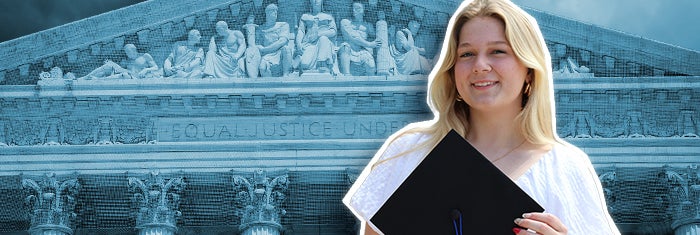
Every day, Americans continue to face discrimination because of their faith. People like Paige Rogers, who, just like Coach Kennedy, lost her job for staying true to her faith.
Because you give, she doesn’t have to stand alone. First Liberty is standing beside her, providing the best possible legal representation—completely free of charge.
Because of faithful supporters like you, First Liberty has achieved an 11–0 record at the U.S. Supreme Court and a 90% win rate across all legal matters.
Early giving for North Texas Giving Day is already here.
Through September 17, the impact of your gift will be doubled through our $100,000 Matching Grant.
Supreme Court Urged to Protect
Native American Religious Site from Destruction
We received a tremendous outpouring of support in our case involving leaders of a Native American church who simply want to worship as they have for centuries.
A redevelopment project threatens to destroy a sacred religious site on the San Antonio river. If they do so, the church cannot perform its religious services, and it will destroy their religious exercise.
We’re asking the U.S. Supreme Court to protect our clients’ constitutional rights by applying the rigorous legal standards that apply when a government substantially burdens a religious community’s beliefs.
A broad coalition of organizations filed friend-of-the-court briefs urging the Court to take up the case, highlight how important this case is for religious liberty, particularly for minority faiths.
“We are grateful for the support from these diverse organizations who understand the importance of protecting religious liberty for everyone,” said Kelly Shackelford, President, CEO, and Chief Counsel for First Liberty.
Briefs in support were filed by:
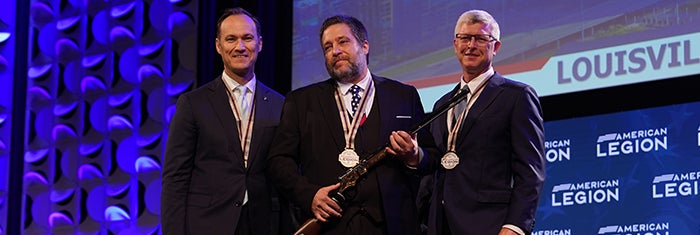
Pastor Chris Avell Recognized With
2026 Onderdonk Religious Liberty Award
First Liberty was at The American Legion National Convention in Louisville, Kentucky this week. We presented the 2026 Philip B. Onderdonk Jr., Religious Liberty Award to Pastor Chris Avell of Dad’s Place Church. Pastor Chris has faced civil and criminal charges in Bryan, Ohio, for keeping the church doors open 24/7 to serve anyone in his community.
Each year, First Liberty bestows this award to an exceptional individual or group for their efforts to defend religious liberty. The honoree receives a custom Henry Repeating Arms Military Service Tribute Edition .22 caliber commemorative rifle, specially engraved for the award. The rifle is donated by Henry Repeating Arms, a strong supporter of our nation’s service members and veterans.
The Award was introduced in 2015 and is named after Philip B. Onderdonk Jr., long-time National Judge Advocate of The American Legion. Past honorees include Knights of Columbus, Shields of Strength, Coach Joe Kennedy, the Northeast POW/MIA Network, President Donald J. Trump and Sen. Ted Cruz.
Watch the award presentation below:
Leading The Conversation | First Liberty in the News
Podcast | “I’m Sorry You’re Offended by History” – President, CEO & Chief Counsel Kelly Shackelford on Texas Values Report
How William Howard Taft Transformed From a Portly President to a Svelte Chief Justice – Senior Counsel Jordan Lorence on SCOTUSblog
The Fight for Free Enterprise – Center for Religion, Culture & Democracy Executive Director Jordan J. Ballor on WORLD Opinions
WATCH: Arkansas Leads The 50 States On Religious Freedom – Center for Religion, Culture & Democracy Senior Fellow Mark David Hall on The Washington Times

Why Religious Liberty Matters at Work
by Jacqueline Isaacs, Center for Religion, Culture & Democracy Fellow
On the first Monday in September, millions of Americans will enjoy a day of rest in honor of work. While Labor Day has its roots in the 19th-century labor movement, today it offers an opportunity to recognize the work Americans do every day to provide for their families, serve their neighbors, and contribute to the flourishing of their communities.
For Christians, there is something fitting about that. Genesis tells us that after six days of creating, God rested from his work. But the biblical significance of work goes far beyond the command to rest from it. From the opening pages of Scripture, work is presented as part of God’s good design, and understanding that design helps explain why our freedom to live out our faith while we work matters too.
Why Our Work Matters to God
In Genesis, God is the first worker, creating, ordering, and cultivating the world. Then He creates human beings in his image and gives them work to do. Even more remarkably, God chooses to accomplish much of His work in the world through us. He could provide food directly, like manna from heaven, but instead he works through farmers, grocers and countless others who help bring food to our tables. He could miraculously heal the sick, but most of the time he brings care and healing through doctors, nurses and other medical professionals. He could send angels to give us perfect knowledge, but instead he educates through teachers and pastors.
Theologians call this “co-laboring” with God. God sometimes acts directly in human history through miracles and angels, but the vast majority of the time God invites us to co-labor with him in his project of human flourishing.
Of course, that is not always what work feels like. While the Fall did not introduce work itself, it did introduce friction into work. The ground produces thorns and thistles. Our efforts sometimes fail to produce the results we intended. In our modern world, that friction appears in difficult coworkers, dysfunctional organizations, failed projects, layoffs, ethical conflicts, and the ordinary exhaustion that accompanies even good work.
Sin made work harder, but it did not erase God’s original purpose for it. Work remains part of his design, and Christians remain called to participate faithfully in it.
Notably, this is not only true of Christians. Every person bears God’s image and can participate in serving others and contributing to human flourishing through their work. We therefore ought to care about the freedom of all people to work according to their convictions, including those who do not share our faith.
Faith Changes How We Work
The Bible also tells us how Christians should approach our work. Colossians 3:23 tells believers, “Whatever you do, work at it with all your heart, as working for the Lord.” We work for God, and that should shape both the quality of our work and the way we treat the people around us.
I often tell Christian college students that when they enter their careers, they should work in such a way that it wouldn’t surprise their colleagues to find out they are Christians. Christians should be known for honesty, excellence, humility and love of neighbor. Our faith should affect the ethical choices we make, the way we respond when work is difficult, and whether the things we create ultimately contribute to the good of others.
It also means our work becomes a form of witness, even if we never directly share our faith. Most Christians will never preach from a pulpit or debate an atheist on a stage, but coworkers, customers, patients, students and clients see us work every day.
In that sense, our work can function as an apologetic. The way we work tells people something about the God we claim to serve.
Why Religious Liberty at Work Matters
Now we get to how understanding what the Bible says about work becomes a religious liberty issue. If our faith shapes why we work, how we work, whom we ultimately work for, and what we believe our work is meant to accomplish, then religious freedom cannot be limited to what happens inside a church building or a home.
First Liberty’s cases show how that can look in practice. For Coach Joe Kennedy, faithfulness meant taking a knee in prayer after a football game. For postal carrier Gerald Groff, it meant observing Sunday as the Sabbath. For physician assistant Valerie Kloosterman, it meant seeking an accommodation when parts of her employer’s requirements conflicted with her Christian convictions and medical judgment.
While these cases were fought in court, protecting religious liberty also requires strong legal safeguards that keep Americans from having to choose between their professions and their deepest convictions.
Work is not spiritually neutral. It should not be separated from our faith. If our work is one of the primary places where we are called to love our neighbors, serve God, and bear witness to him, then religious liberty must protect our freedom to do that work faithfully.
—
Jacqueline Isaacs, MBA, is a fellow at First Liberty’s Center for Religion, Culture & Democracy. She is currently completing a Doctor of Ministry in faith, work, and marketplace ministry at Fuller Theological Seminary. She holds an MBA in marketing from Johns Hopkins University and a B.S. in government from Oral Roberts University.
Editors’ Picks | Stories Around the Nation
First Person: Kentucky And The Importance of Religious Liberty – Kentucky Today
Faith Leaders, Justice Department Meet To Push For Stronger Protections For Houses Of Worship – EWTN News
Can Faith-based Groups Deliver Humanitarian Aid Better? Trump Is Betting $2 Billion They Can – Deseret News
What If America’s Religious Decline Has Been Overstated? – The Christian Post
Church Wins Unanimous Federal Ruling In Tithing Case Appeal – Deseret News