by Mike Berry, Director of Executive Affairs & Senior Counsel • 3 minutes
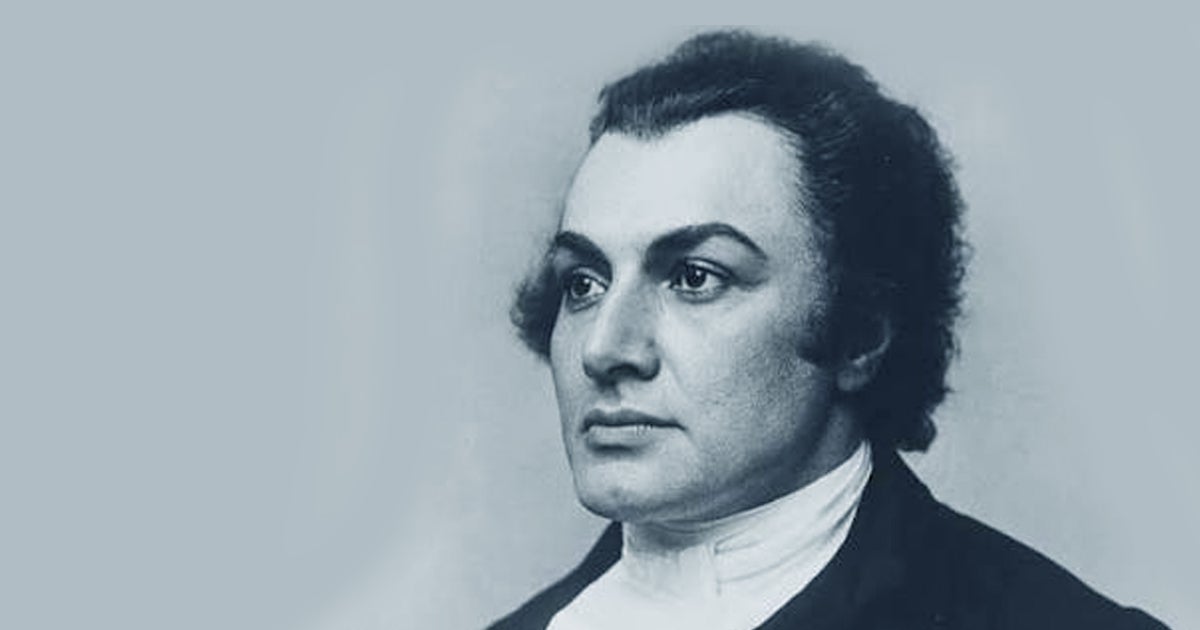
Haym Salomon was a man history has often forgotten. His name is not among those learned in history classrooms across America. When he died at just 44 years of age in 1785, Salomon was destitute. But Haym Salomon was not a failure. His young family was left with nothing because he gave everything for the cause of liberty.
Salomon is often remembered as the Jewish patriot and financier who helped sustain the American Revolution. That is an important part of his story. Indeed, Washington’s successful campaign at the pivotal Battle of Yorktown would have been a spectacular failure had it not been for Salomon’s financial provision. But his deeper legacy lies in the connection between his support for independence and his later advocacy for religious liberty.
He understood something essential about the American experiment: political independence meant little if Americans remained divided into classes of citizens based on their religious beliefs.
Salomon believed wholeheartedly in the American idea, and he became deeply involved in the patriot cause. The British repeatedly captured and imprisoned him, even sentencing him to death at one point. But he escaped and eventually established himself in Philadelphia.
There, he became a successful financial broker and worked closely with Robert Morris, the Superintendent of Finance of the Continental Congress.
At a moment when the fledgling Continental government desperately needed money and credit, Salomon repeatedly put his own resources and financial standing at risk. His contributions helped provide the funds necessary to sustain the war effort.
The Revolution, however, required more than money.
It also required a vision of what kind of country Americans were trying to create.
For Salomon, that question became intensely personal after the war. Pennsylvania’s 1776 Constitution contained a religious oath requirement for public office. The oath requirement was designed to disenfranchise Pennsylvania’s Quaker majority—Quakers object to taking any oaths. But the requirement also effectively excluded Jews from public office. This created a striking contradiction.
The very patriot who had helped finance a revolution in the name of liberty was excluded from full participation in political life because of his religious convictions.
So Haym Salomon did what he had always done: He acted.
In 1783, he and other Jewish leaders successful petitioned Pennsylvania to remove the religious restriction. He insisted that the liberty he had helped purchase must include religious liberty.
But Salomon’s legacy also reveals another equally important lesson. He did not demand that the government adopt Jewish laws or even that Jews deserved special treatment under the law. Rather, he argued that because Jews had fought for American independence, supported the revolutionary cause and made great sacrifices for the new nation, they should be granted equal privileges of citizenship. Salomon declared: “I am a Jew; this is my own nation; I do not despair that we shall obtain every other privilege that we aspire to enjoy with our fellow citizens.”
His life embodied that principle before the First Amendment formally enshrined it in the Constitution.
Sadly, Salomon did not live to see the full development of the American tradition of religious liberty. He died five years before the ratification of the First Amendment. But the movement toward broader religious freedom was already underway, and the Jewish community’s advocacy formed part of the larger American understanding of religious freedom.
In 1790, George Washington captured this emerging ideal in his famous letter to the Hebrew Congregation of Newport. He promised that the new American government would give “to bigotry no sanction, to persecution no assistance” and recognized the equal liberty of conscience.
Salomon never saw those words. But he helped build the country in which they could be spoken.
And there is an extraordinary irony in how his story ended.
The man who helped finance American independence died in poverty. The money he had put at risk did not become the fortune that might have secured his family’s future. In purely material terms, his investment in the Revolution did not pay off.
But liberty is not always measured on a balance sheet.
Salomon’s fortune disappeared. His legacy did not.
That is why Haym Salomon deserves to be remembered not simply as a Jewish patriot or Revolutionary financier, but as a defender of religious liberty.
He risked his fortune to help create an independent nation. Then he risked his reputation and influence to make that nation more faithful to its own ideals.
Haym Salomon’s life teaches a lesson about the meaning of American liberty: the people who secure freedom are not always the people who live long enough to enjoy its full fruits.
Sometimes the greatest legacy a person can leave is the liberty he sacrifices to make liberty possible for others.