President’s Religious Liberty Commission Presents Final Report
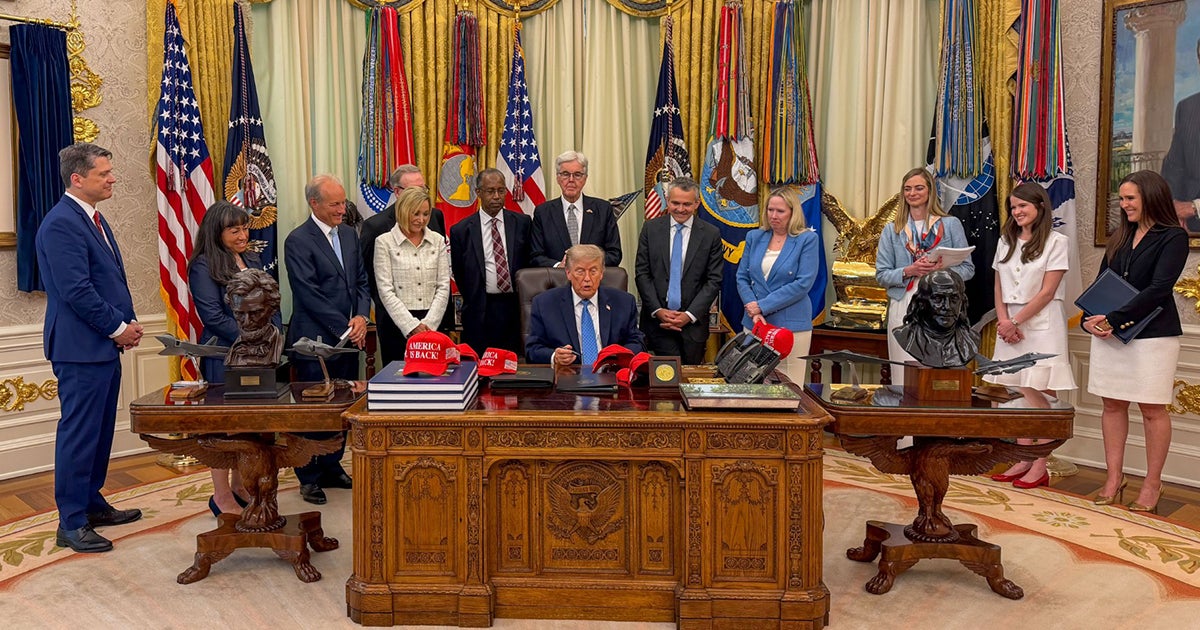
Just in time to celebrate America’s 250th anniversary of independence, the Religious Liberty Commission presented its draft report to the President.
The Commission spent months hearing testimony from teachers, students, parents, military chaplains, service members, healthcare professionals, private-sector employees, and religious leaders who shared firsthand accounts of discrimination because of their faith.
The result is a comprehensive set of recommendations to help ensure that every American can freely exercise their faith without fear of government censorship or retaliation.
“This is a great gift to every American, and it’s especially appropriate on the 250th birthday of our country,” said First Liberty President & CEO Kelly Shackelford—a member of the Commission. “We are delivering recommendations to improve religious freedom for all Americans nationwide, and we have a President of action.”
Watch below as Kelly shares more about the ceremony in the Oval Office and why this moment matters for the future of religious freedom:
The Commission presented 12 key recommendations to strengthen religious liberty for all Americans:
“Over the past 250 years, religious liberty has been indispensable to all the movements that seek to fulfill the promise of the Declaration of Independence,” the report states. “But as we have seen in recent decades, religious liberty must be protected, preserved, and cherished. That responsibility belongs to every generation. Our hope and prayer is that Americans will meet that responsibility with the same wisdom, courage, and devotion to freedom that have sustained our nation for 250 years.”
City of San Antonio Wants to Destroy a Religious Site
The city of San Antonio is telling a Native American tribe they can no longer worship as they have for centuries.
First Liberty is asking the U.S. Supreme Court to protect our clients’ constitutional right to practice their religion freely, without government telling them how or where they should worship.
Numerous tribes worship at a sacred site in Brackenridge Park near the San Antonio River. Throughout the site’s long history, indigenous peoples have gathered there for ceremonies, seasonal meetings, access to fresh water, and spiritual observances. The site is central to modern Lipan Native American Church traditions.
The city of San Antonio planned a significant city redevelopment project for the park, but it would require destroying the place of worship. Our clients asked the city to redevelop the site without destroying it. The city refused and told the group to worship elsewhere.
“The city telling them they can ‘just go worship elsewhere’ is nothing short of the government redefining their religious beliefs,” said First Liberty Senior Counsel Stephanie Taub. “San Antonio can redevelop the area without bulldozing a centuries-old native American religious site.”
The National Anthem’s Forgotten Prayer
by Amelia Metz, First Liberty Intern
Whenever you’ve attended a sporting event or holiday celebration, you’ve probably sung “The Star-Spangled Banner.” It’s a song most Americans know by heart. You may not even remember being taught the lyrics — you just knew it.
But one part you may not know is that the version of the song we sing at events is only the first stanza. Francis Scott Key wrote three more.
The lesser-known fourth stanza reads like a prayer.
O thus be it ever when freemen shall stand
Between their lov’d home and the war’s desolation!
Blest with vict’ry and peace may the heav’n rescued land
Praise the power that hath made and preserv’d us a nation!
Then conquer we must, when our cause it is just,
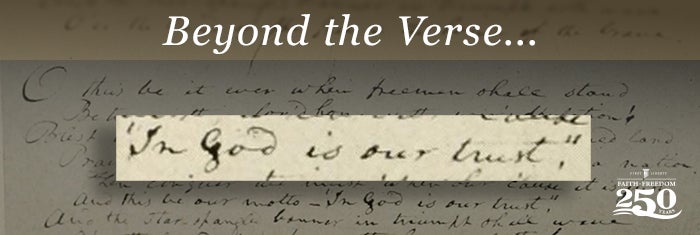
And this be our motto – “In God is our trust,”
And the star-spangled banner in triumph shall wave
O’er the land of the free and the home of the brave.
The often-hidden stanza reveals how religious language influenced our nation’s identity from the beginning.
But this faith-driven style of communication did not remain confined to Key’s quill and paper. Over time, it became embedded into the broader civic identity of the United States.
“The Star-Spangled Banner” was written in 1814 but did not become the official national anthem until President Herbert Hoover signed it into law in 1931, over a century later.
What Key may not have expected is that a particular phrase in his songwould later find itself a permanent home in American lingo.
The line “And this be our motto – ‘In God is our trust’” foreshadows the establishment of the American motto — “In God We Trust.” President Dwight D. Eisenhower made it the national motto in 1956.
This is about more than just forgotten lyrics. It offers a window into the values that shaped American identity — individualism, equality, opportunity, freedom and, as Key suggests, faith.
He expresses that the victory of the American Revolution came from God rescuing the American people: “Blest with vict’ry and peace may the heav’n rescued land…”
In the line “Praise the power that hath made and preserv’d us a nation,” Key articulates that there was a Higher Power guiding us to and through the establishment of the United States. Man alone did not create this nation — God did.
This shows that faith wasn’t just a label used lightly. It expressed the Divine Providence of God throughout the development of the nation.
The tree of American culture is rooted in faith and patriotism. This root — the love of God and of country — is what allows all other values to grow. By infusing these two core values into our nation’s identity, the founding patriots successfully found the characteristics they had searched for in a free country. Rights come from God, not from men. By being gifted with the rights of individualism and equality, we have found freedom in opportunity.
From the “Declaration of Independence” to “The Star-Spangled Banner,” faith has appeared in patriotic texts and events, highlighting the importance of the Free Exercise Clause in our daily lives.
The fact that the fourth stanza of the anthem is one that is lesser-known reveals an unfortunate truth about our country’s memory:
Public memory has favored convenience. By forgetting the final stanza, we have removed the conviction, ignored the duty, and forgotten the virtue our nation has been called to.
So, as we approach the 250th anniversary celebration of our nation, it’s important to remind ourselves of our history and the reason for our founding.
Since the beginning, faith-based patriotic traditions have helped Americans find unity in shared purpose, meaning and language.
“The Star-Spangled Banner” shows how centuries-old text can endure the changes of time and be formalized far beyond the creator’s lifetime. Remembering these forgotten words can help Americans better understand who we are as a nation.
Leading The Conversation | First Liberty in the News
Texas Protects Religious Freedom, Speech, Clarifies Law for Wedding Officiants – Executive General Counsel Hiram Sasser on The Lion
Appeals Court Revives Lawsuit by Alaska Airlines Flight Attendants Fired After Opposing Pride Message – Senior Counsel Stephanie Taub on Fox News
Orthodox Jew Fights Back, Says California City Fined Him for Home Prayer Meetings – Senior Counsel Ryan Gardner on Fox News
Podcast | Understanding Abraham Kuyper Public Theology – Center for Religion, Culture & Democracy Executive Director Jordan Ballor on Ave Maria in the Afternoon
Podcast | Is America Really a Christian Nation? – Center for Religion, Culture & Democracy Senior Research Fellow Mark David Hall in Summit Ministries
Socialism Runs the Table in New York – Center for Religion, Culture & Democracy Senior Fellow Hunter Baker in WORLD Opinion
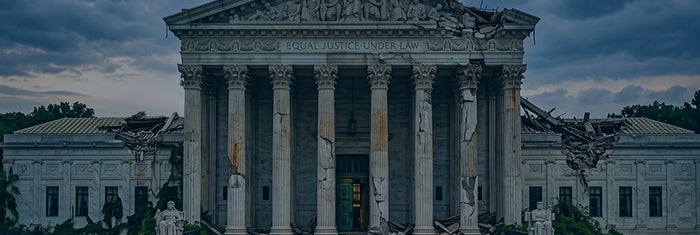
Freedom Crumbles Under the Weight of Court Packing
by Mike Berry, Executive Director of External Affairs & Senior Counsel
Americans often think threats to freedom arrive dramatically—with riots in the streets, military coups, or cross-border invasions. While those external threats are certainly real and worrisome, liberty is also at risk from the inside. History teaches that we are more susceptible to subtle threats, like a cancer that slowly metastasizes until it is too late.
Consider Venezuela.
In 2004, then-President Hugo Chávez and his allies pushed through reforms that expanded the country’s Supreme Court from 20 justices to 32. The ruling coalition then filled the newly created seats with loyalists, effectively guaranteeing the Chávez regime complete control of the nation’s highest court. What followed should concern every American.
Over the next two decades, Venezuela’s judiciary ceased functioning as an independent entity. The court became increasingly committed to advancing the ruling party’s political objectives rather than the rule of law. Since 2004, the Venezuela Supreme Court has issued more than 45,000 decisions. Of those, none—not a single decision—has gone against the ruling party.
The result was not merely a constitutional crisis. It was the gradual suffocation of liberty itself.
The lesson is simple: when politicians can change the size of a court whenever they dislike its decisions, judges become politicians in robes and courts become instruments of political power.
Many Americans view court-packing as an abstract constitutional debate. It is not. And for people of faith, it is a direct threat to religious liberty.
Religious freedom ultimately depends on an independent judiciary. Legislatures can pass protections, and executives can issue promises, but when government officials decide to punish religious expression, exclude religious organizations from public life, or discriminate against the faithful, courts are often the last line of defense.
Every major religious-liberty victory in recent American history depended upon judges willing to stand against political pressure. Whether protecting churches from religious hostility, safeguarding conscience rights, defending religious schools against discrimination, or ensuring that people of faith are not forced to choose between their beliefs and participation in public life, independent courts have served as essential guardians of the First Amendment.
Imagine those same cases being decided by judges selected specifically because they would support the ruling party’s anti-religious liberty agenda.
That is precisely why court-packing is so dangerous. It changes the fundamental question before the judiciary. Instead of asking, “What does the Constitution require?” judges begin asking, “What outcome does the political coalition that empowered me prefer?”
Religious minorities are always among the first to suffer under such a system.
History demonstrates that governments rarely begin by targeting everyone. They start with unpopular groups, dissenters, and those whose convictions challenge prevailing political orthodoxies. Religious believers often fall into that category because faith traditions answer to a higher authority than the state.
An independent judiciary provides protection against that temptation. A captured judiciary enables it.
The Framers understood this danger well. Alexander Hamilton described the judiciary as the “least dangerous” branch because it possessed neither the power of the purse nor the sword. Its legitimacy depended entirely upon public confidence that judges would apply the law rather than serve political masters.
Court-packing destroys that confidence.
The issue is not whether one agrees with a particular Supreme Court decision. Americans of good faith will continue to disagree passionately about constitutional interpretation. The issue is whether the rules of the game remain fixed even when outcomes are disappointing.
A nation committed to self-government accepts electoral losses and seeks change through persuasion. A nation tempted by authoritarianism changes institutions until it can no longer lose.
Americans should pay attention because constitutional liberty is not self-executing. It depends upon institutions strong enough to resist political pressure and principled enough to protect unpopular rights.
Religious liberty especially requires such protection. The freedom to worship, teach, evangelize, educate children according to one’s faith, and live consistently with deeply held convictions cannot survive if courts become extensions of political power.
If Venezuela teaches us anything, it is that freedom is rarely lost all at once. It is lost when independent institutions are transformed into partisan instruments and citizens convince themselves that constitutional safeguards are obstacles rather than protections.
Court-packing may sound like a technical reform. In reality, it is one of the quickest ways to undermine the rule of law and place every constitutional liberty—including religious liberty—at risk.
Once the courts belong to the government, freedom belongs to the government, too.
Editors’ Picks | Stories Around the Nation
Dems Demand Supreme Court ‘Reform’ Because Justices Ruled ‘Temporary’ Means…’Temporary – World Net Daily
What Christians Should Know About the Supreme Court’s ‘Landor Ruling’ – Christianity Today
World Cup Showcases America’s Unique, Enviable Freedoms – Washington Times
US Men’s Team Prays on Field, Honoring God After Second World Cup Win – Christian Broadcast News