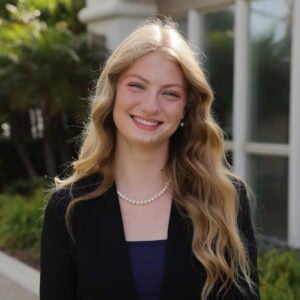


Bethany Hall is a full-time undergraduate student at Liberty University who is currently majoring in Music & Worship. The State of Virginia offers a Virginia Tuition Assistance Grant Program (“VTAG”) that provides financial assistance to state residents attending a Virginia accredited college or university. VTAG offers eligible students up to $5,000 per school year, but limits eligibility to “nonprofit private institutions of higher education whose primary purpose is to provide collegiate, graduate, or professional education and not provide religious training or theological education.” Bethany relies on this tuition aid to afford her college education.
When Bethany, motivated by her faith, changed her major from “Music Education” to “Youth Ministries,” she heard VTAG might declare her ineligible for their student aid. Hoping to alleviate the problem, she changed her major again to “Music & Worship.” VTAG still however declared her ineligible due to the religious nature of her major, denying her grant for the 2023-24 and 2024-25 academic years.
Hall claimed the VTAG program violated her free exercise rights under the First Amendment. Virginia, through its director of the State Council of Higher Education for Virginia, moved to dismiss the lawsuit asserting the decision in the U.S. Supreme Court’s 2004 decision in Locke v. Davey barred Hall’s claims. The District Court dismissed Hall’s case with prejudice, and the Fourth Circuit Court of Appeals affirmed their decision. Judge Julius Richardson authored a concurring opinion stating that he believed Locke controlled the Court’s decision but, nonetheless, believes “Locke was wrongly decided” and “a stain on our Free Exercise jurisprudence.” And, while Judge Richardson believes that “the Supreme Court has all but confined it to its facts . . . until the Court formally buries Locke, we lower-court judges must keep applying it.”
Attorneys for Bethany are asking the Supreme Court to overturn Locke v. Davey and establish a new precedent that defends religious freedom.
“It is odious to our Constitution for a state to fund a degree in music but refuse to fund a degree in music & worship,” said Steven Fitschen of National Legal Foundation. “The Free Exercise clause is meant to encourage and even prefer religion. But Virginia’s decision to deny funding based upon religious use is the type of hostility toward religion rejected by the First Amendment.”
Josh Davey, who was the respondent in Locke v. Davey and is now an attorney with Troutman Pepper Locke and co-counsel in Hall v. Fleming, said, “Twenty-two years ago, the Supreme Court’s decision allowed states to single out students like me because our course of study related to our religious calling. I am hopeful that the Court will correct that decision and treat students like Bethany equally.”
“Excluding students from a state scholarship or grant simply because their choice of major is religious is discriminatory,” said Jeremy Dys, Senior Counsel for First Liberty Institute. “Locke betrayed the Founder’s commitment to religious liberty. The Supreme Court should formally overrule it.”
“The government can’t deny publicly available benefits because a student’s major is too religious. That’s religious discrimination. It’s wrong, and it’s unconstitutional,” said John Bursch, Senior Counsel and Vice President of Appellate Advocacy at Alliance Defending Freedom.
In the petition, attorneys argue, “Only the Supreme Court can overrule Locke, and there is every reason for the Court to overturn that erroneous decision now. Locke was wrong when it was decided, and this Court’s subsequent caselaw has further eviscerated its fatally flawed foundation.”
News Release
For Immediate Release: 8.12.26
Contact: Natalie Konstans, media@firstliberty.org
Direct: 972-941-4454
ADF Media Relations, (480) 444-0020
or www.adfmedia.org/book-interview
Virginia College Student Asks U.S. Supreme Court to Restore Equal Treatment of Students
Petition asks court to overturn Locke v. Davey, reverse ban on tuition assistance for students pursuing religious ministry majors
WASHINGTON—The National Legal Foundation, Claybrook LLC, Troutman Pepper Locke, First Liberty Institute, and Alliance Defending Freedom filed a petition Tuesday at the U.S. Supreme Court on behalf of Liberty University student Bethany Hall, asking the justices to reverse a 2004 court decision allowing state-funded scholarship programs to exclude students pursuing a degree in religious studies.
“It is odious to our Constitution for a state to fund a degree in music but refuse to fund a degree in music & worship,” said Steven Fitschen of National Legal Foundation. “The Free Exercise clause is meant to encourage and even prefer religion. But Virginia’s decision to deny funding based upon religious use is the type of hostility toward religion rejected by the First Amendment.”
Josh Davey, who was the respondent in Locke v. Davey and is now an attorney with Troutman Pepper Locke and co-counsel in Hall v. Fleming, said, “Twenty-two years ago, the Supreme Court’s decision allowed states to single out students like me because our course of study related to our religious calling. I am hopeful that the Court will correct that decision and treat students like Bethany equally.”
“Excluding students from a state scholarship or grant simply because their choice of major is religious is discriminatory,” said Jeremy Dys, Senior Counsel for First Liberty Institute. “Locke betrayed the Founder’s commitment to religious liberty. The Supreme Court should formally overrule it.”
“The government can’t deny publicly available benefits because a student’s major is too religious. That’s religious discrimination. It’s wrong, and it’s unconstitutional,” said John Bursch, Senior Counsel and Vice President of Appellate Advocacy at Alliance Defending Freedom.
In the case, Bethany is simply asking for the same treatment every other student receiving the Virginia Tuition Assistance Grant (“VTAG”) enjoys: the right to choose her course of study. As a full-time undergraduate student at Liberty University, she qualified for a $5,000-per-year grant under the VTAG program. But when Bethany changed her major from “Music Education” to “Youth Ministries” and then again to “Music & Worship,” VTAG declared her ineligible for the $5,000 grant unless she dropped her religious major.
Fitschen and the National Legal Foundation, joined by Frederick Claybrook of Claybrook LLC, represented Hall through the U.S. Court of Appeals for the 4th Circuit, which concluded that, “in the absence of any statement from the Supreme Court questioning or rejecting Locke’s holding, it is still the law,” and denied her claim.
Judge Julius Richardson, writing in a concurring opinion to the 4th Circuit’s decision, noted that Locke “is a stain on our Free Exercise jurisprudence.” But, Richardson continued, “until the [Supreme] Court buries Locke, we lower-court judges must keep applying it.”
In the petition, attorneys argue, “Only the Supreme Court can overrule Locke, and there is every reason for the Court to overturn that erroneous decision now. Locke was wrong when it was decided, and this Court’s subsequent caselaw has further eviscerated its fatally flawed foundation.”
###
To arrange an interview, contact Natalie Konstans at media@firstliberty.org or by calling 972-941-4454, or contact ADF Media Relations at (480) 444-0020 or go to www.adfmedia.org/book-interview.
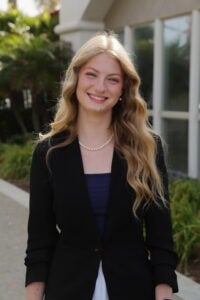
Bethany Hall
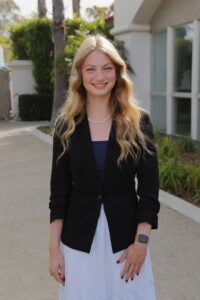
Bethany Hall



 CASE SUMMARY
 PRESS RELEASES
 LEGAL DOCUMENTS
 PHOTOS AND VIDEO