North Carolina Town Targets Church
for Holding Religious Gatherings
Banning a church from a space that any other organization or business could use is wrong and unconstitutional.
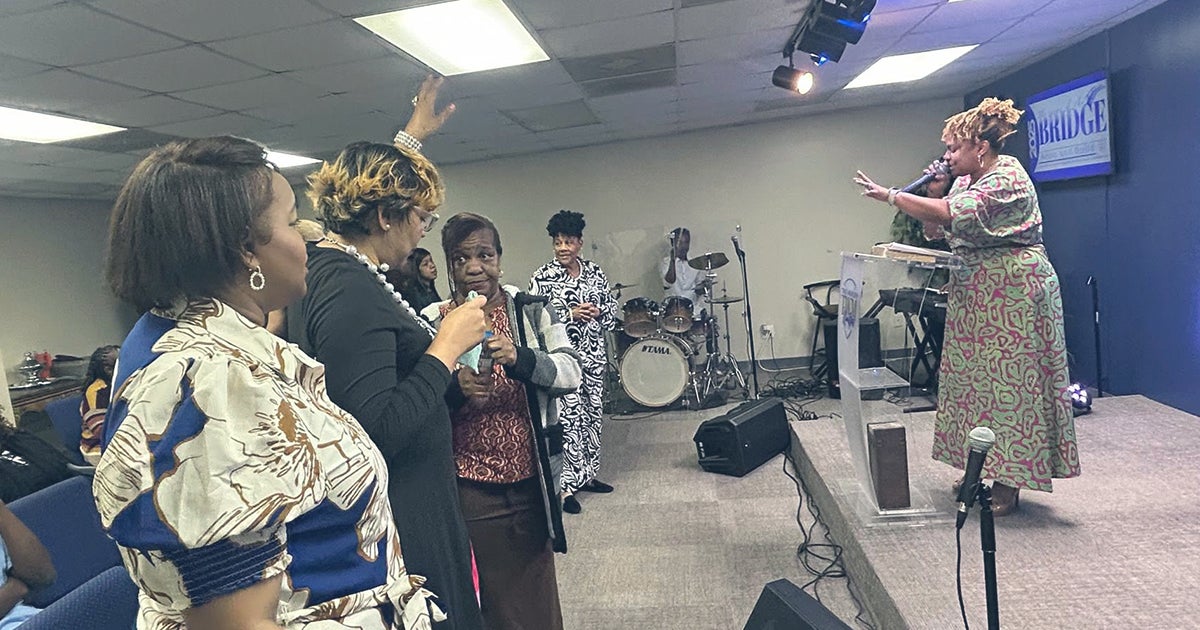
The Town of Troy, North Carolina told True Worship Ministries to stop renting a temporary event space because the church’s gatherings are religious.
True Worship Ministries is renting the space until it can transition to a new, permanent location. The space is operated by The Innovative Action Center, a nonprofit focused on providing a place where minority communities can gather for business or community purposes.
The town sent a cease-and-desist letter along with a warning citation. It says they’re violating the zoning ordinance because churches are not allowed in the Main Street zone.
“The church is simply asking to be treated like any other entity or temporary renter in the area,” said Ryan Gardner, Senior Counsel at First Liberty. “The First Amendment and federal law protect the right of churches to operate free from unreasonable and intrusive government interference.”
First Liberty sent a demand letter stating that the city’s ordinance that specifically targets and excludes churches is unlawful under the First Amendment and federal law.
Big Win for Remote Employee Fired
for Not Getting COVID Vaccine
We’re happy to announce a victory for Maria Govea, who was fired from Arrow Electronics for refusing the COVID-19 vaccine due to her religious beliefs.
After years of litigation, the company agreed to settle and compensate Maria for the discrimination she faced.
Maria is a devout Catholic who worked remotely as a transportation specialist for more than nine years. In January 2022, she was terminated for declining the vaccine. While travel to two company locations was possible, both places did not require vaccination.
She requested a religious accommodation, which posed no undue hardship on her employer. Even so, the company rejected her request.
After Maria filed a charge of discrimination, the Equal Employment Opportunity Commission pursued her claims against the company.
“As people of faith confront a hostile corporate culture, it’s perhaps more important than ever to understand what the law says about religious discrimination and accommodation,” said Cliff Martin, Senior Counsel for First Liberty. “We are grateful that the EEOC held corporate America to our country’s historic commitment to religious freedom.”
“I am grateful to the EEOC for not only fighting for myself,” Maria said, “but all who were unjustly fired for their faith.”

Victory: Amazon Will Deliver Religious Accommodation
Great news for our client, Connor Dorsey, a shipping manager for Amazon in Canton, Mississippi. The company has agreed to grant a religious accommodation so that Connor—who’s a devout Catholic—can observe the Sabbath on Sundays and and other Holy Days of Obligation.
When Amazon began scheduling him for shifts on Sundays, Connor was forced to use his PTO each Sunday in order to follow his conscience and uphold his religious commitments. He requested an accommodation and asked to switch to an open position so he could observe the Sabbath.
Amazon initially said “No” to Connor’s request. After First Liberty sent a demand letter, the company quickly and impressively corrected course.
Management agreed to accommodate Connor’s observances with a schedule that fully aligns with his religious beliefs.
“Amazon’s actions in this situation serve as a great example,” said Cliff Martin, Senior Counsel for First Liberty,“that all companies must follow federal law when religious accommodation requests are submitted by employees.”
First Liberty’s U.S. Supreme Court victory in Groff v. DeJoy set a major precedent strengthening legal protections for people of faith at work. The 9-0 ruling changed the legal standard for workplace accommodation, making it much more favorable for religious employees.
“Amazon has taken the right action,” Martin continued, “based on Supreme Court precedent set in Groff, which made it clear that a religious accommodation must be granted unless it poses an undue hardship on the business, not just a minor inconvenience.”
Even with that precedent, religious discrimination in the workplace remains a serious problem. Employers have been slow to adjust religious accommodation policies following our victory in Groff.
More companies would do well to follow Amazon’s lead. Religious accommodation requests are here to stay, and companies that follow the Supreme Court’s direction aren’t just doing what the law requires. They’re also doing what’s right and beneficial for hardworking Americans.
The positive outcome of this case goes to show that employees don’t have to choose between their faith and their job. On the contrary, it’s a prime example that religious freedom and workplace productivity can coexist.
Leading The Conversation
The Socialists Want a New Constitution. Believe Them. – President, CEO & Chief Counsel Kelly Shackelford | The Blaze
Religious Liberty Is Measured by Freedom in Practice – President, CEO & Chief Counsel Kelly Shackelford | Washington Examiner
Conscience Rights at Risk – Executive General Counsel Hiram Sasser | Townhall
Amish Man Reportedly Jailed Over Electronic Permit, County Accused of Criminalizing ‘Being Amish’ – Senior Counsel Ryan Gardner | CBN News
Finding Their Way to Faith – Center for Religion, Culture & Democracy Scholar Raleigh Adams | National Review

One Case Could Reshape Parental Rights for Generations
by Moriah O’Hare, Associate Counsel
On December 7, First Liberty will be at the Supreme Court arguing on behalf of parents in the case of International Partners for Ethical Care, Inc. v. Ferguson.
This monumental case challenges Washington laws that allow minors who run away from home to obtain access to “gender affirming treatment” without requiring parental notice or consent.
This law, which permits the state to intentionally withhold crucial information, directly impacts parental authority.
Parents who believe that disagreement over a particular issue could cause a child to run away may reasonably begin to change how they relate to their children under the shadow of that possibility. They may become more reluctant to enforce rules, impose consequences, or even engage in difficult conversations for fear that doing so would lead the child to run away.
The 9th U.S. Circuit Court of Appeals dismissed this concern, characterizing the parents’ injury as “self-inflicted.”
Decades of social science research suggests otherwise. A minor running away is not an isolated event. Parental-notification laws affect the way that children behave.
More than that, moms and dads do not make decisions in a vacuum. Rather, their behavior is shaped by the incentives, risks, and consequences that they perceive. When they perceive conflict with their child and think that their child may run away, they are more likely to capitulate and alter their behavior.
Fear can change parenting. When they are constantly fearful, they often become hesitant to raise children consistent with their beliefs.
Research on family dynamics has shown that parents’ expectations about how children will respond to discipline influences the boundaries they set and the consequences they impose. When the perceived cost of enforcing a rule rises, parents may become more permissive. What might appear to be a voluntary decision to “self-inflict” an injury may rather be a predictable response to a changed environment.
Because of the Washington laws, parents now face a choice that did not previously exist: raise their children according to their beliefs and risk losing parental involvement or betray their convictions and preserve the relationship.
A child does not actually have to run away for that choice to affect a family. The possibility itself can change how parents behave. A mom or dad who fears losing involvement in a child’s care may hesitate to say “No,” impose discipline, or challenge the child on difficult issues.
Washington has changed what can happen when a child runs away from home. By changing those consequences, the State may change how parents exercise their authority long before any child actually leaves.
Editors’ Picks
A Big Religious Liberty Win for Faith-Based Charities – PJ Media
Justice Scalia Was Right About Religious Freedom – National Review
Judge Upholds Law Banning Religious Exemptions to Vaccine Mandates – Christian Post
Cities Church Harassed Weekly After ICE Protest, Pastor Says – WORLD
Opinion | James Talarico Should Be Saying ‘Thank God for the Bible’ – Washington Times