Which States Rank Highest—and Lowest—for Religious Liberty?
We’re thrilled to announce the launch of the 2026 Religious Liberty in the States index!
Each year, First Liberty’s Center for Religion, Culture and Democracy publishes a nationwide index of domestic religious freedom. It ranks religious liberty protections for each of the 50 states. The index focuses on select legal safeguards of religious exercise in state laws and constitutions.
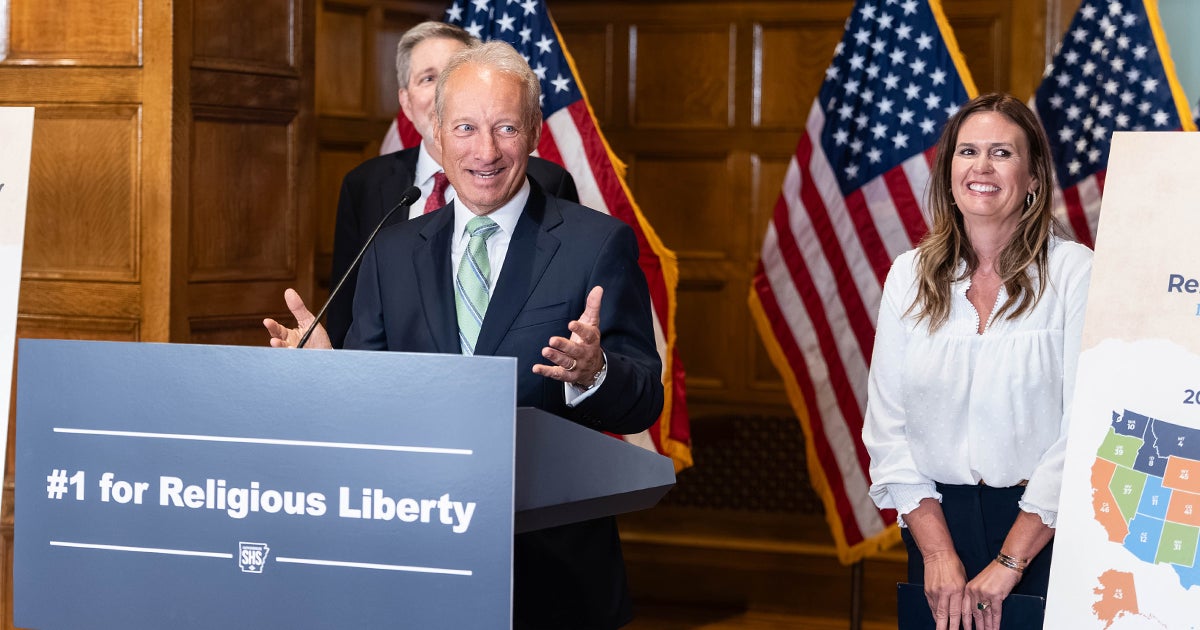
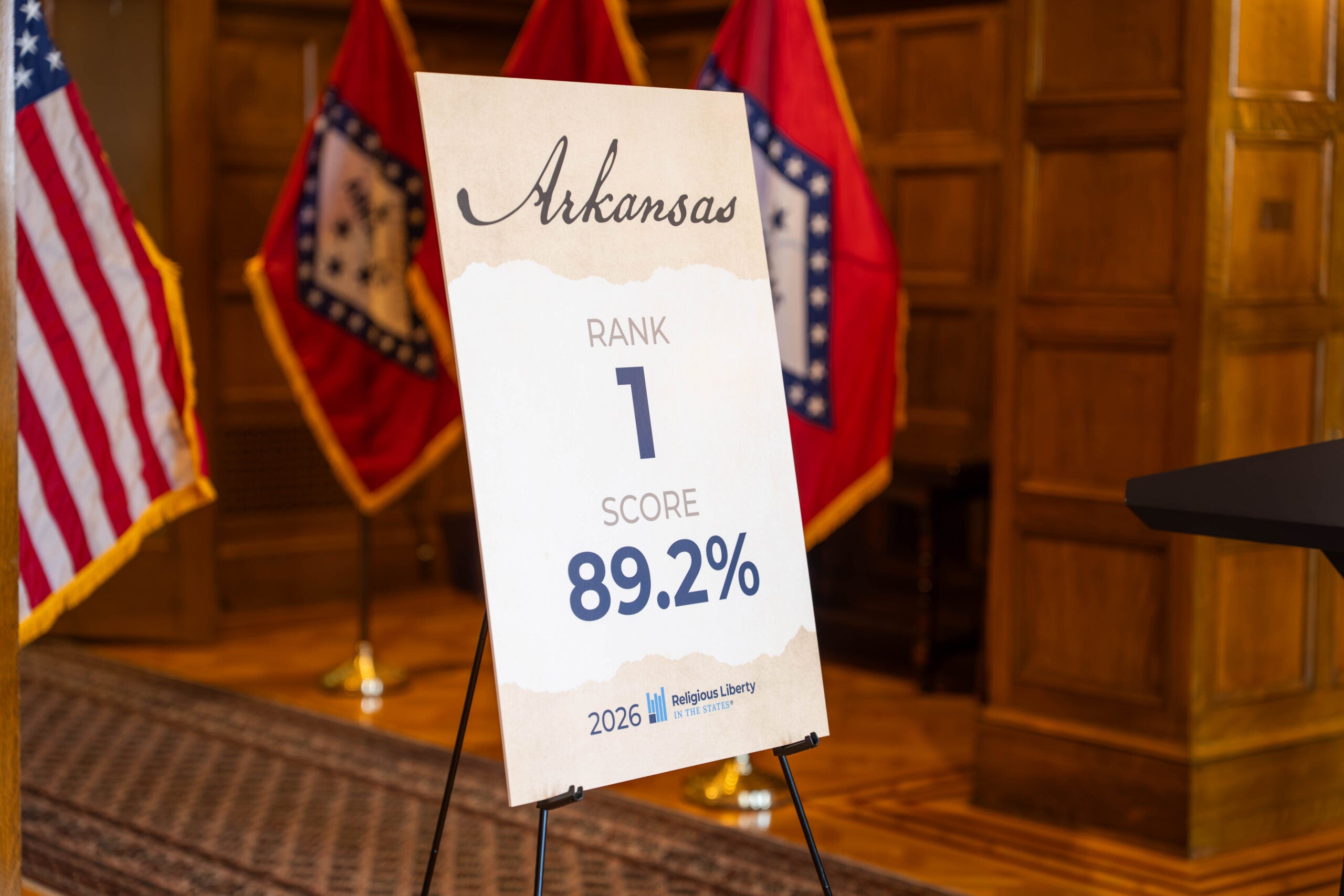
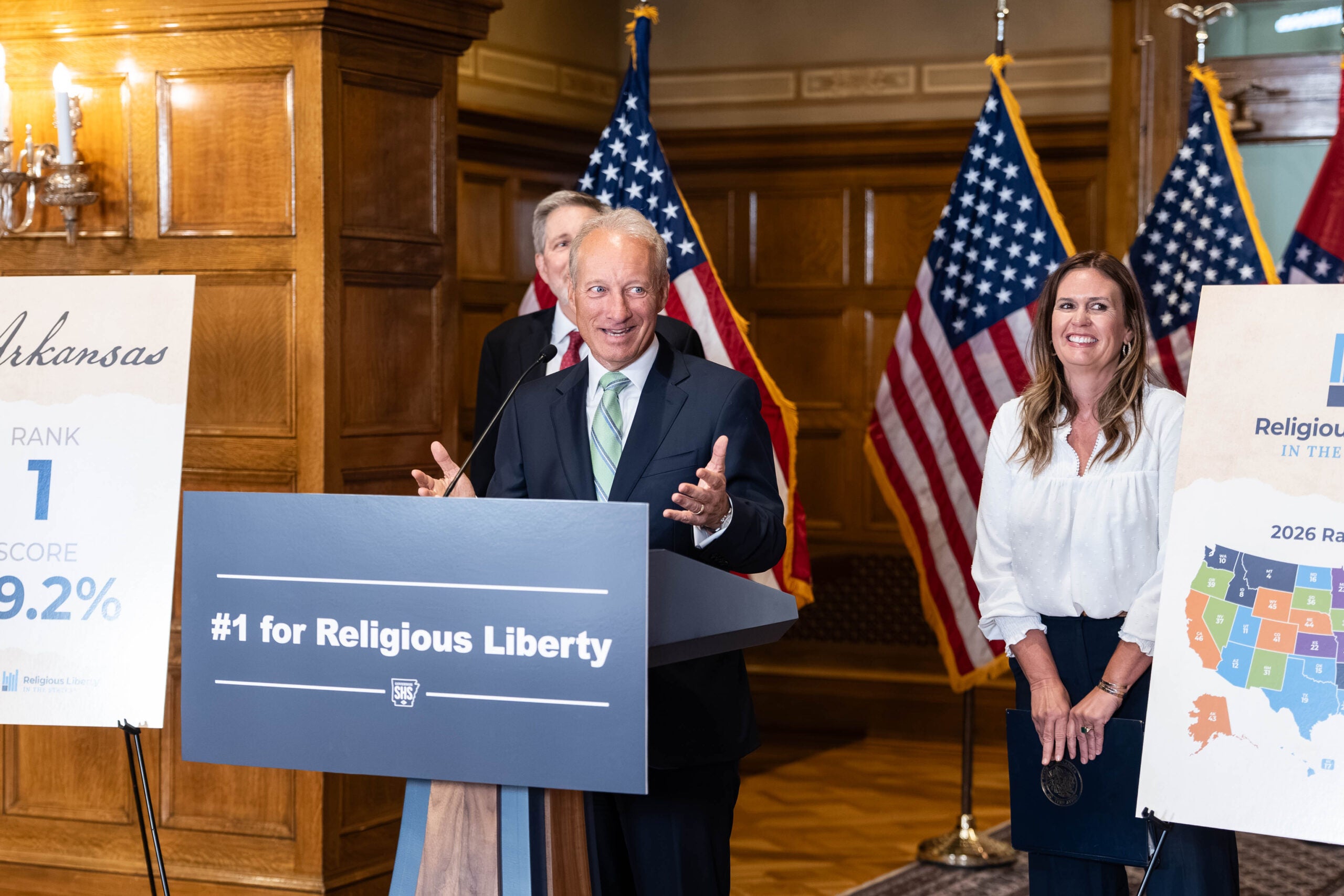
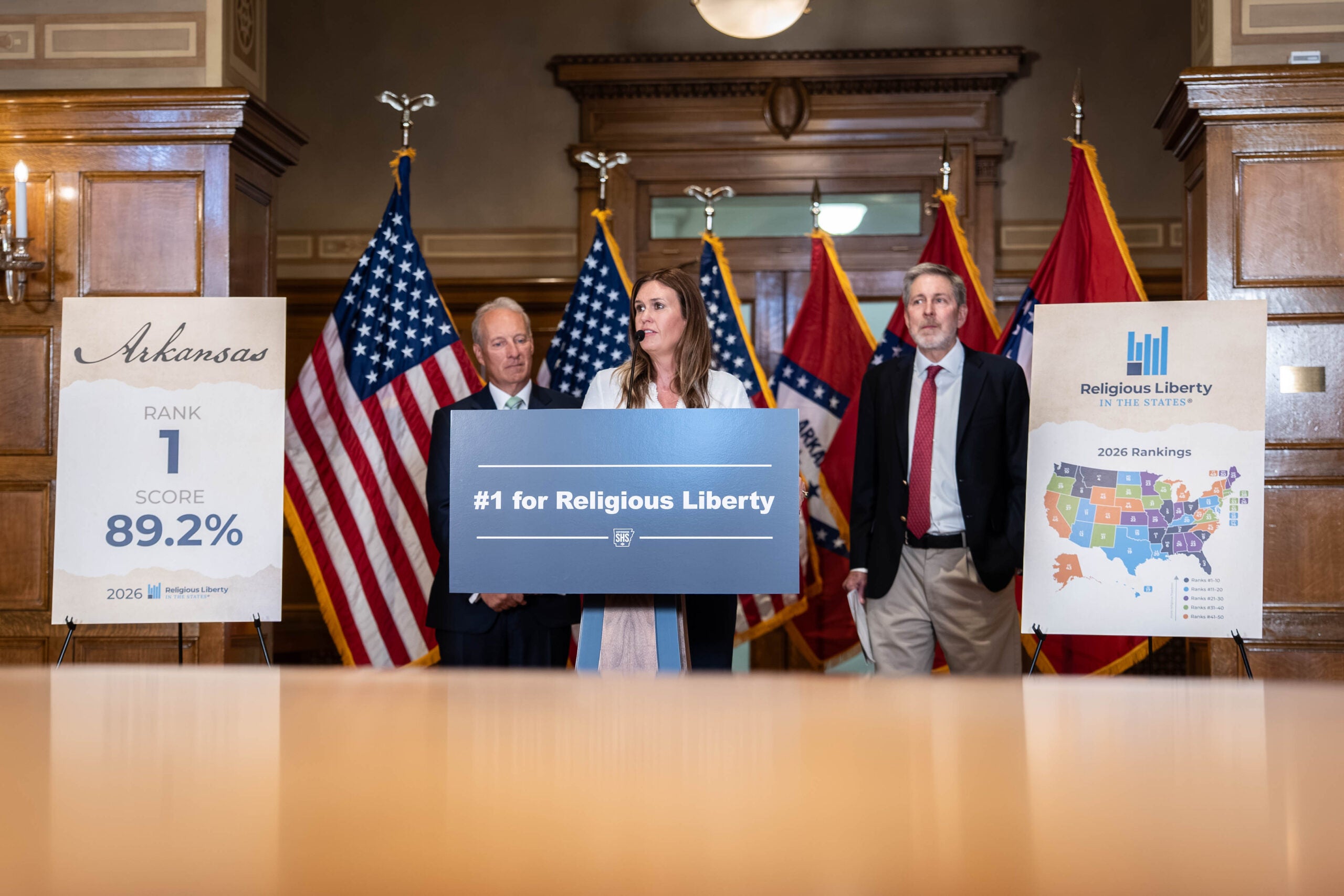
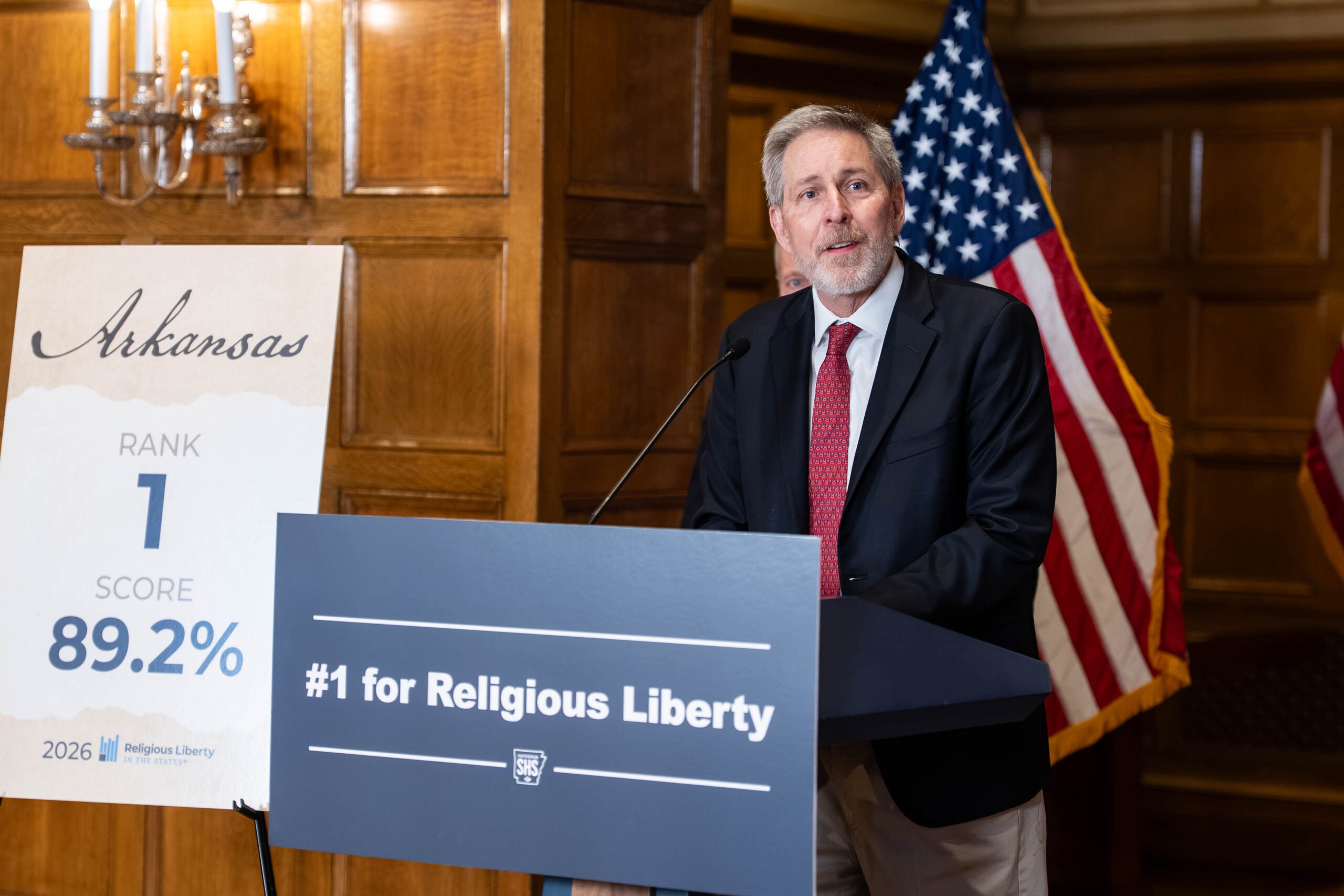
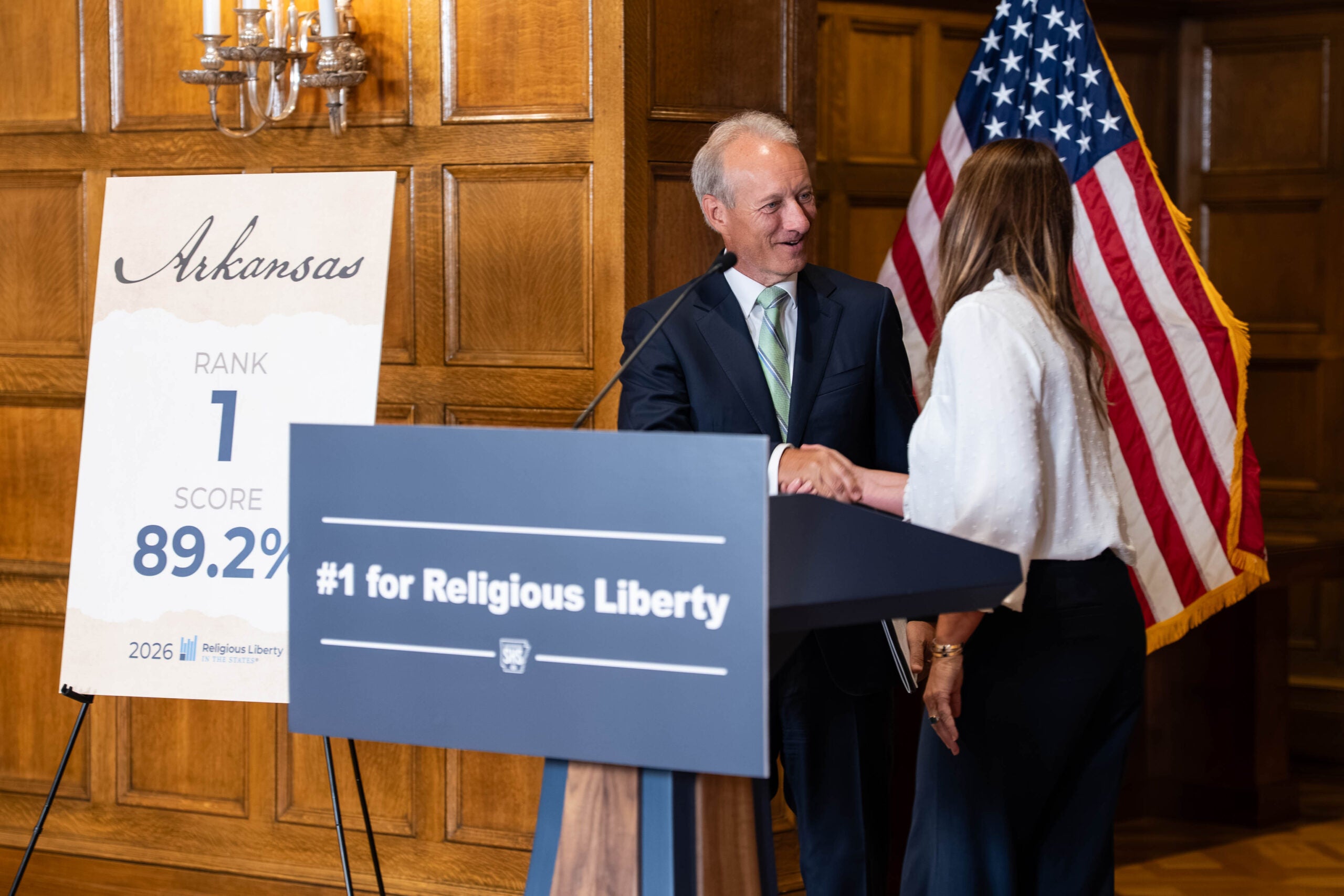
On Tuesday, our team unveiled the results at the Arkansas State Capitol alongside Gov. Sarah Huckabee Sanders.
Watch below:
Which States Rank Best…and Worst?
Religious Liberty in the States assigns an aggregate percentage score to each state, determined by the number of religious liberty “safeguards” found in state constitutions and laws. The 2026 index evaluates 50 distinct legal protections, which we’ll discuss in more detail in a forthcoming section.
Here are the top 5 states:
Arkansas’s rise to first place is due in large part to legislation adopted in 2025. The state enacted a law that protects individuals and institutions from being forced to participate in wedding ceremonies to which they have religious objections.
“Religious liberty is America’s First Freedom, and Arkansas is leading the nation in protecting it,” said Governor Sanders. “Our rights come from God, not government, and every American should be free to live according to their faith and conscience. We’ll continue defending that freedom and ensuring the Natural State remains the best place in the country to live, work, and worship.”
“Religious liberty is best protected when leaders are willing to act before the rights of people of faith are threatened,” said President and CEO Kelly Shackelford.
“Governor Sanders and Arkansas lawmakers have taken that responsibility seriously, adopting strong protections that help ensure Arkansans can live and work according to conscience,” he continued.
On the flip side, the 5 states with the lowest scores are:
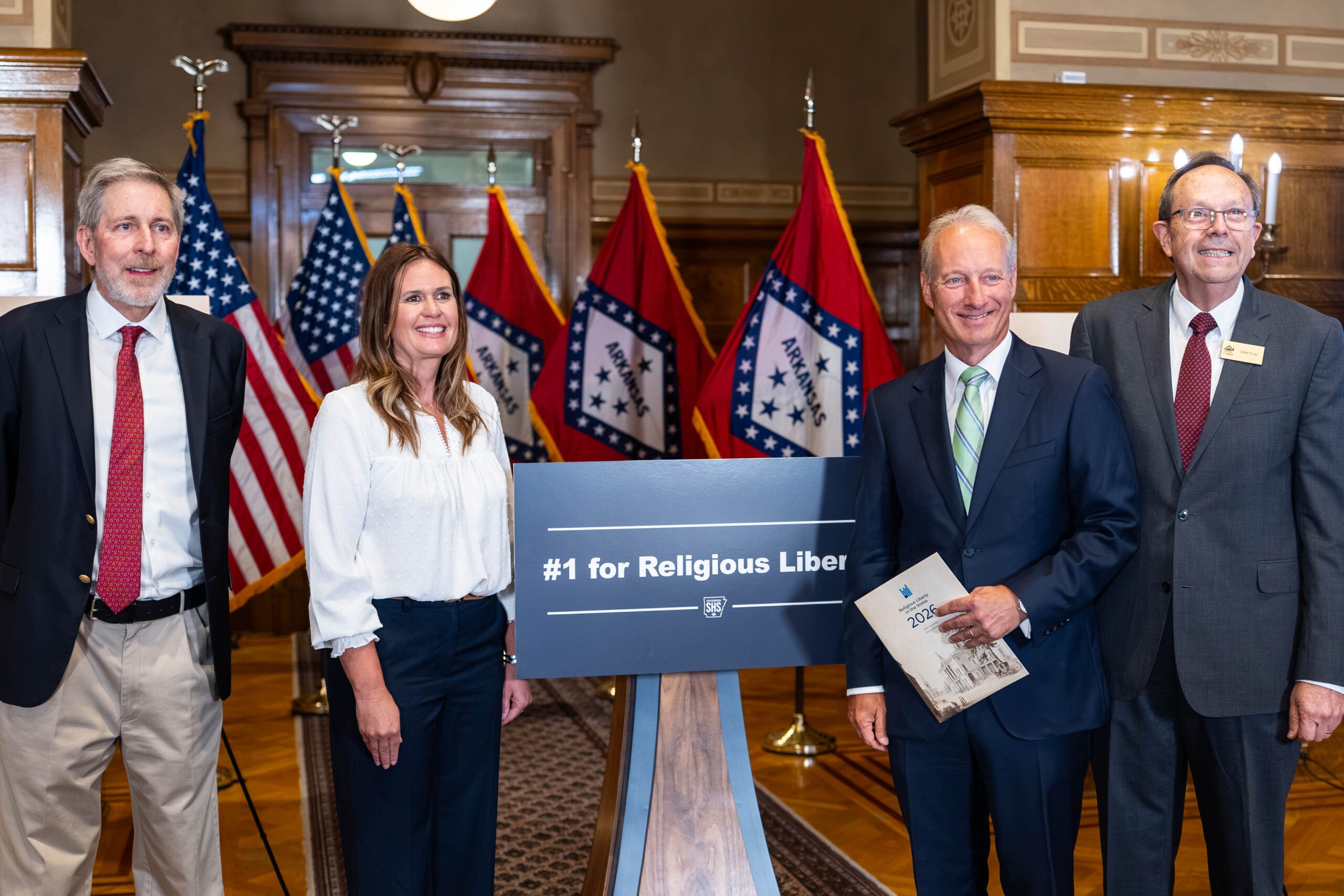
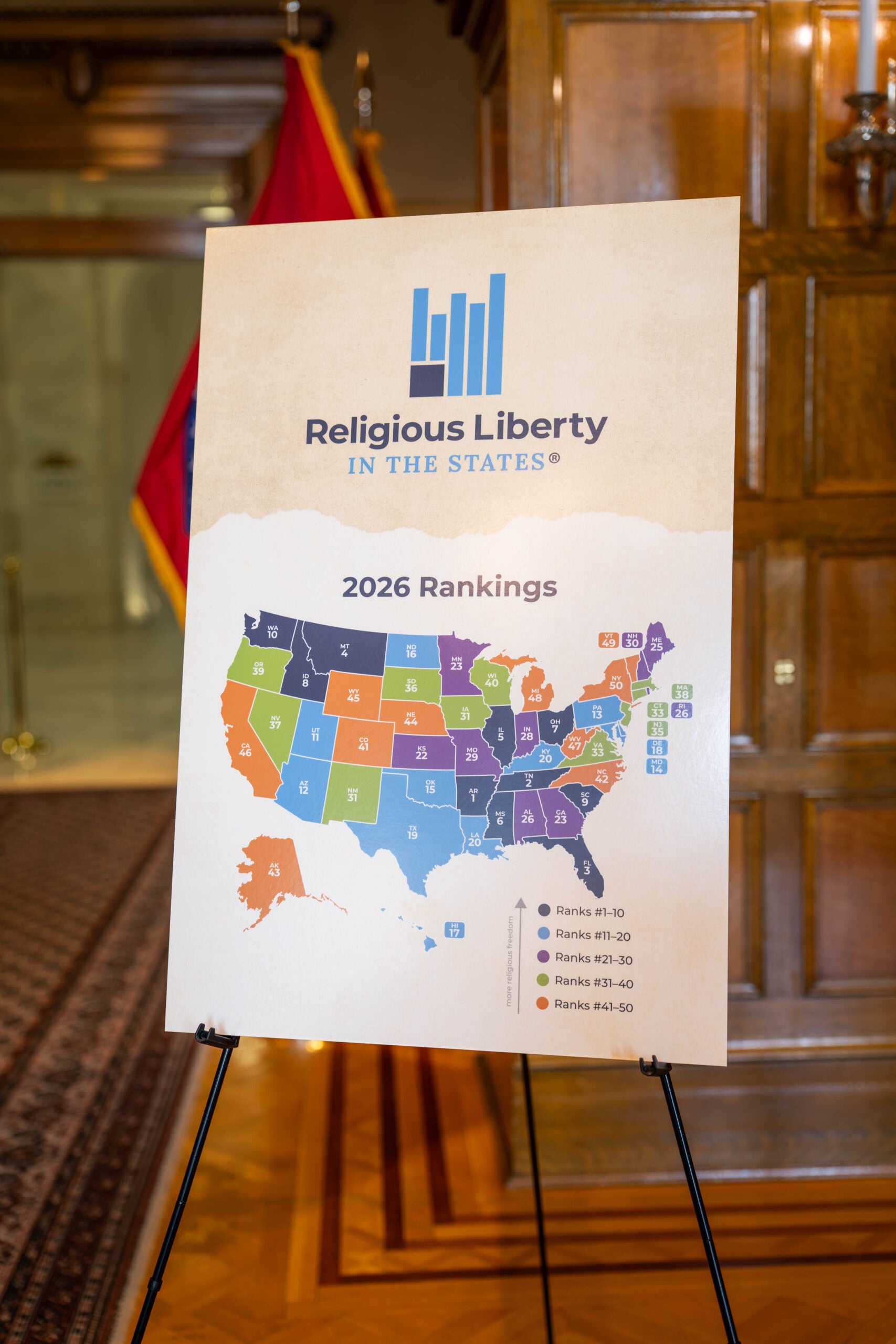

Now in its fifth annual edition, the Index analyzes all states on 50 detailed items.
This year’s new measures include a medical conscience protection that permits individuals to decline to participate in genetic counseling and a protection for individuals to opt-out of joining labor unions if they have religious objections to doing so. It also marks whether states protect people from discrimination at public institutions of higher education because of their religious commitments.
Because of Religious Liberty in the States, everyday Americans can now access quality and reliable information to help them understand what their states are doing to protect religious liberty. What’s more, the index also provides a resource to state governments and legislatures on what they can do to better protect the free exercise of religion.
Kelly Shackelford Talks Supreme Court
Decisions with Texas Lt. Gov. Dan Patrick
Is the U.S. Supreme Court still faithfully interpreting the Constitution—or is it drifting from its original role?
First Liberty President and CEO Kelly Shackelford joins Texas Lt. Gov. Dan Patrick to examine the Supreme Court’s most consequential recent decisions and what they mean for the future of the country.
They discuss why some conservatives have questioned recent rulings, the judicial philosophies of Chief Justice John Roberts and Justice Amy Coney Barrett, birthright citizenship, executive authority, court packing, Chevron deference, Title IX, transgender policies, religious liberty, and why judicial appointments may be the most lasting legacy of any presidency.
Whether you’re a student of the Constitution or simply want to understand how Supreme Court decisions affect your daily life, this conversation offers valuable insight into one of the most important institutions in American government.
Watch below:
The State Of Maine Continues to Single Out Religious Schools
A federal appeals court recently upheld a harmful state law that targets our clients, Crosspoint Church and Bangor Christian Schools.
In an opinion issued late last week, the U.S. Court of Appeals for the First Circuit ruled that the school can uphold religious beliefs but may not act on them.
Maine law allows schools to hold religious beliefs and apply them in hiring practices. However, schools could still be punished if they act on their religious beliefs on gender identity and sexual orientation. Religious schools could be sued if they continue to separate men’s and women’s sports teams, restrooms, or locker rooms, for example.
“Religious education plays a critical role in our diverse society, but Maine’s leadership will not tolerate conduct consistent with those religious beliefs,” said First Liberty attorney Jeremy Dys.
“While we’re grateful the court recognizes our clients’ religious convictions, there is still more work to be done for them to freely operate according to them,” Dys added.
Leading The Conversation | First Liberty in the News
Arkansas Takes Home Top Ranking For Religious Freedom After Gov Sanders Expands Key Protections – President and CEO Kelly Shackelford on Fox News
Alaska Airlines’ Woke Purge Just Hit Legal Turbulence – Senior Fellow Stephanie Taub on Blaze Media
Teach Commanders Religious Liberty Before They Need It – Senior Fellow Chris Motz on Stars and Stripes
The State of Religious Liberty in the States – Center for Religion, Culture & Democracy Executive Director Jordan J. Ballor on WORLD
The Art of Remembering – Center for Religion, Culture & Democracy Research Fellow Kirsten Anderson Birkhaug on Law & Liberty
Podcast | Religious Liberty in the US Today – Center for Religion, Culture & Democracy Scholars John Wilsey, Mark David Hall, Paul Mueller on Ciceronian Society
The Bible that Stopped a Bullet
by Erin Reynolds, First Liberty Intern
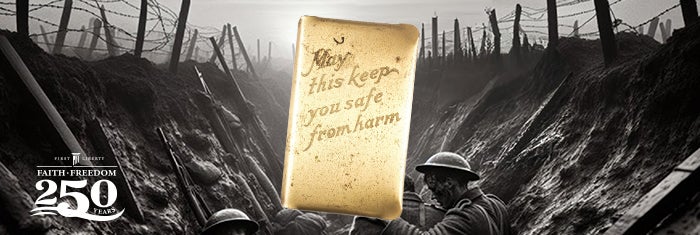
John Phillips, a brave soldier in World War II, received a Heart Shield Bible days before his deployment. He, like many other soldiers, kept the travel-sized book in his uniform chest pocket.
However, this was no ordinary Bible. It earned the name Heart Shield because of its metal-plated cover. This intentional design was crafted to protect the soldier’s most vital organ from being struck by a bullet. It ultimately served to protect John from a fatal wound.
On a cold winter day, during the Battle of the Bulge, the Nazis launched a counteroffensive attack, and John suddenly found himself in the center of an ambush.
It was then that the unthinkable happened. John was shot five times. Knocked to the snow-covered ground, he immediately reached for his heart. Expecting to find blood, he instead discovered his Bible with a bullet embedded in the cover.
John’s life was spared that day, and the providence of God was seen through his small pocket Bible. This soldier, like many others, knew he was not fighting alone. His faith gave him the strength to persevere, even through unimaginable circumstances.
Franklin D. Roosevelt authorized the distribution of these Bibles and penned a personal note at the front.
“As Commander-in-Chief I take pleasure in commending the reading of the Bible to all who serve in the armed forces of the United States. Throughout the centuries, men of many faiths and diverse origins have found in the Sacred Book words of wisdom, counsel, and inspiration. It is a foundation of strength now, and always, an aid in attaining the highest aspirations of the human soul.”
Along with this note of encouragement, these Bibles included the New Testament, the Psalms, and often patriotic songs such as the Star-Spangled Banner. Roosevelt’s endorsement united the men under a banner of strength and purpose. This collection served as an anchor for soldiers who might become discouraged or need a reminder of the values they fought for.
Russell Barber, a U.S. Army chaplain, played a major role in distributing the Bibles. He preached services on multiple ships just days before the US invaded Normandy. At each service, he handed them out to the brave men who eagerly awaited.
These booklets extended an invitation for the soldiers to armor up both physically and spiritually. It brought light into the midst of darkness and equipped the men with the guidance they desperately needed.
250 years later, religion continues to inspire Americans. Presidents like Roosevelt, Eisenhower, Lincoln, and Washington have all recognized the importance of faith, unity, and courage. John’s Heart Shield Bible serves as a powerful reminder of how faith can provide hope in times of uncertainty.
Editors’ Picks | Stories Around the Nation
New Poll: Nearly Half of Americans Don’t Know What America’s 250th Is Celebrating – CATO Institute
DSA’s New Platform Seeks to ‘Replace’ Presidency and Supreme Court, Nix Electoral College – Washington Examiner
Opinion | Reclaiming Religious Liberty from Distortion – Daily Signal
Religious Liberty at the Supreme Court: What Every Faith-Based Organization Should Be Watching in 2026 – National Law Review
Opinion | OMB’s Proposed Grant Reform Promises a Major Victory for Religious Liberty – Daily Signal