by Jayla Ward • 4 minutes
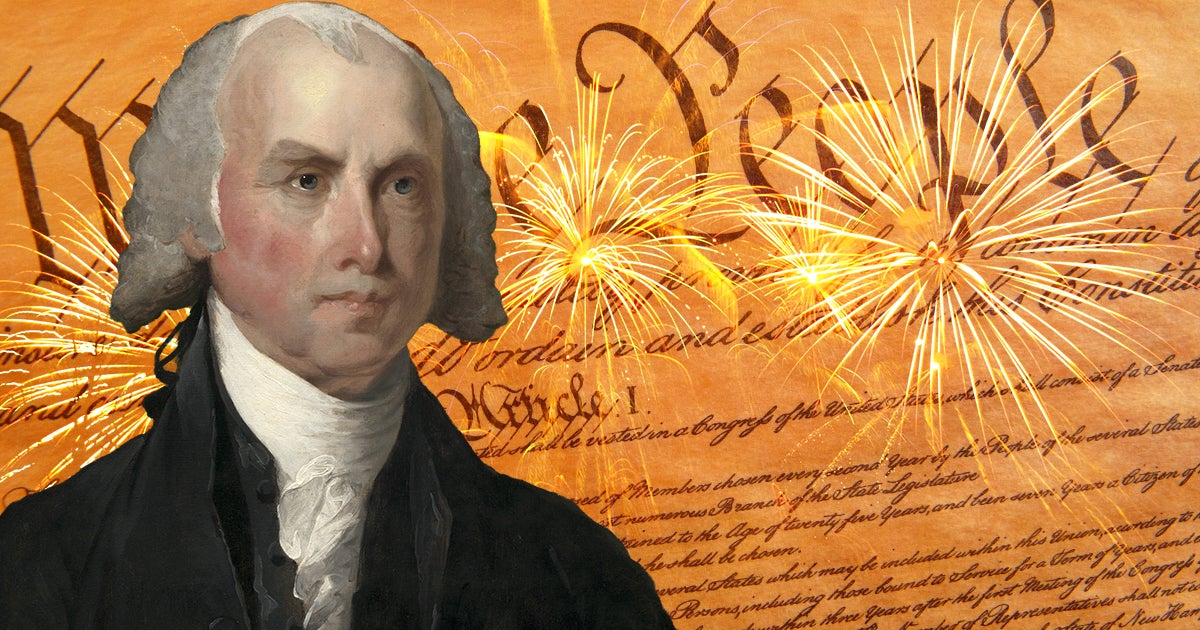
On March 16, we celebrated James Madison’s birthday. His role as the major architect of the U.S. Constitution and Bill of Rights cannot be overstated.
Throughout our history, many scholars have called him the “Father of the Constitution,” and with good reason. When the Constitutional Convention began in 1787, no other delegate was better prepared than Madison. He’d already spent years studying and refining concepts of government. His proposals were the working model used by the Convention delegates, and his writings (namely those in the Federalist Papers) were central in the ratification of our country’s founding document.
However, many do not know that his deep passion to protect religious minorities is what inspired his most important contributions.
James Madison was born March 16, 1751 in Virginia to a wealthy family of plantation owners. Like many Virginia families at the time, they attended the Anglican Church. Growing up, he witnessed the arrest and persecution of Baptist preachers and followers in his hometown.
Religious intolerance was common in Virginia at that time. Before the American Revolution, many Baptists and Presbyterians were fined and jailed for preaching without a license. Other religious groups were also punished for practicing their faith or dissenting from the commonly held religious beliefs of the time.
At the young age of 23, Madison found the actions of the authorities disturbing and began to work on how to solve the issue. He wrote a letter to his friend William Bradford, expressing his distress about the persecution of “these well-meaning men (who) were in jail for publishing their religious sentiments.”
Madison voiced his concern, asking Bradford, “Is an Ecclesiastical Establishment absolutely necessary to support civil society in a supreme Government? & how far it is hurtful to a dependent State?” Simply put, at what point does enforcing established religion infringe upon the personal liberties and conscience of others? And does it truly benefit society?
Madison’s encounters with religious persecution kickstarted his education and career. He focused his efforts on securing protections for personal religious convictions and ensuring freedom instead of compulsion.
In 1776, Madison worked on an important foundational document known as the Virginia Declaration of Rights, a model for the U.S. Bill of Rights that would come years later. Madison proposed a small but profound change in the wording, which originally called for the “toleration” of religion. That seemingly harmless phrase essentially implied there was one state-approved religion, and government would merely put up with others.
Madison wanted the toleration phrasing taken out, arguing that “all men are equally entitled to enjoy the freedom of exercise of religion, according to the dictates of conscience.” In the end, Madison succeeded and inserted the phrase “free exercise of religion,” which truly protected the right of an individual to follow his conscience.
His efforts didn’t stop there. In 1786, Madison’s political savvy and effective negotiation helped him succeed at ratifying the Virginia Statute of Religious Freedom, an important document Jefferson had written years earlier designed to protect religious liberty.
Three years later, as part of the battle to ratify the Constitution by the 13 colonies, Madison drafted the Bill of Rights, including what was to become the First Amendment. In fact, Madison’s original draft included an ambitious protection of religious liberty, which stated, “The civil rights of none shall be abridged on account of religious belief or worship…nor shall the full and equal rights of conscience be in any manner, or on any pretext, infringed.”
Congress largely relied on Madison’s original draft, and the states subsequently ratified two principles — “no establishment” and “free exercise” — that protect religious freedom as a fundamental, inalienable right for every person.
The final version that we know today—”Congress shall make no law respecting an establishment of religion, or prohibiting the free exercise thereof”— clearly bears Madison’s stamp.
In addition to his passion for religious liberty, Madison underscored that “conscience is the most sacred of all property.” Because religious rights were central to Madison’s worldview, he saw the inherent link between freedom of conscience and freedom of religion.
Madison was convinced that keeping government out of the affairs of the Church was the only way people could follow the dictates of their conscience. He viewed established state religion as a denial of the fundamental, God-given right of conscience.
Due to this, he concluded that the institution of the Church should be separate from the State and not directed by the government in any way, a principle that was enshrined in his original draft of the First Amendment.
As America nears its 250th anniversary of independence, we honor and celebrate Madison’s enduring legacy and his lifelong efforts to ensure citizens have the right to live according to their deepest convictions without government interference. Through his work, he paved the way for every American to freely and openly live out their faith.