7 First Liberty Cases Are Now at the U.S. Supreme Court
by First Liberty Institute
We recently filed two cases at the U.S. Supreme Court—which means there are now seven First Liberty cases pending at the nation’s highest court.
The Court will resume hearing cases in about 30 days. Court analysts at SCOTUSblog have five of our cases on their “Petitions We’re Watching” list.
Our most recent petitions involve religious liberty in education:
College Student Can’t Choose a Religious Major
The state of Virginia told Liberty University student Bethany Hall that she is ineligible for a state grant program. . Why? Because she chose to pursue a “Music and Worship” degree. The program specifically excludes “religious training or theological education.” First Liberty is working with Steve Fitschen of the National Legal Foundation, Troutman Pepper Locke, and others in asking the justices to protect Bethany’s religious freedom.
The case also presents the Court with an opportunity to reverse a 2004 decision that state-funded scholarship programs can exclude students pursuing degrees in religious studies.
California Discriminates Against Religious Home School Families
John and Breanna Woolard, Hector and Diana Gonzales, and Carrie Dodson are devout Christians. They educate their children at home, at their own kitchen tables. California offers a charter school program in which homeschool families can access public funds to purchase curriculum, other instructional materials, and extracurricular activities.
But the state says parents in the program are not allowed to choose any religious curriculum or school materials — even if they buy them with their own money. We argue that the government is excluding these families from a publicly available benefit, which is unconstitutional.
These are the other cases that we’ve asked the nation’s highest court to hear. Each has major implications for the constitutional rights of Americans when they share their faith, as well as the rights of religious employees and houses of worship.
 Religious Organizations Have a Right to Access
Federal Funds, DOJ Legal Opinion States
by Mike Berry, Senior Counsel and Executive Director of External Affairs
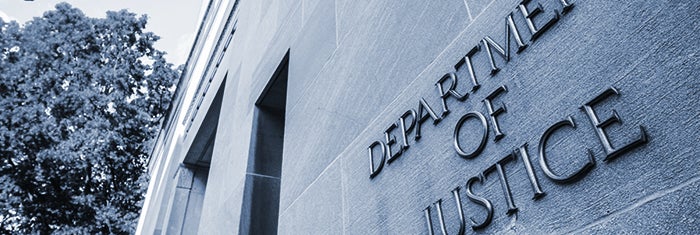
The U.S. Department of Justice’s Office of Legal Counsel (OLC) recently issued a landmark legal opinion that fundamentally changes how the federal government interacts with faith-based organizations. The opinion declares that blocking federal funds from being used for religious purposes or by religious groups is generally unconstitutional.
Here is a breakdown of what this decision means and why it matters.
The Problem: The Locke Block
In 2004, the Supreme Court issued one of its more infamous decisions in Locke v. Davey. In Locke, the Court ruled that a state could deny a scholarship to Joshua Davey because he planned to pursue a religious degree. Davey was free to attend any school, even a religious school, so long as he didn’t actually study religion.
For decades, federal funding programs operated under a strict rule: the government could give money to a religious charity for a non-religious purpose (like operating a homeless shelter or providing disaster relief), but that money must never touch explicitly religious activities (like prayer or religious instruction).
The Solution: Un-Locke-ing the Door to Religious Liberty
This new OLC memo sweeps that distinction away. It concludes that restricting federal funding based on either a group’s religious status (who they are) or its religious use of the funds (what they do) violates the First Amendment’s Free Exercise Clause. Under this new guidance, if the government opens up a funding program to the public, it cannot exclude an organization based on its religious status, or even if it plans to use that funding for religious activities.
What Does this Actually Mean?
The immediate focus of the OLC memo centers on the Department of Health and Human Services (HHS), which administers billions of dollars in federal grants for social services, childcare, and healthcare.
Why This Matters
This OLC opinion represents a major victory for religious liberty. No American should ever be forced to choose between their beliefs and participating in civic life. For far too long, people of faith have had to tolerate religious discrimination in government funding. Hopefully, this is a giant first step towards ending that discrimination.
First Liberty’s Role
First Liberty’s legal victories at the U.S. Supreme Court played a vital role in shaping the DOJ’s opinion. In fact, the memo directly cites two of our cases as the legal basis for updating and issuing this guidance.
Our victory in Kennedy v. Bremerton School District (the Coach Kennedy case) got rid of nearly fifty years of terrible case precedent known as the “Lemon test.” In Kennedy, the Supreme Court replaced the Lemon test with an analysis rooted in America’s history and tradition.
And our victory in Carson v. Makin (the Maine school choice case) made it clear that states cannot exclude Christian students from receiving funds just because they choose to attend a Christian school.
The OLC opinion relies heavily on both of these cases, and others, to reach its conclusion that the federal government may not discriminate against people of faith even if they will use those funds for a religious purpose. It is this feature that highlights what we hope will be a future First Liberty Supreme Court victory.
There have been repeat attempts to limit the Locke decision’s discriminatory effects against people of faith. For example, in 2017, 2020, and again in 2022, the Supreme Court ruled that states cannot restrict funds to religious schools just because they are religious. But Locke has never been formally overturned. That could change in the very near future.
As we recently announced, First Liberty has teamed up with the National Legal Foundation, Claybrook LLC, Troutman Pepper, and Alliance Defending Freedom in a case that asks the nation’s highest court to review and correct the precedent set in Locke v. Davey. Our case involves college student Bethany Hall, who was told she could not receive state tuition aid because she chose a religious degree.
It is especially gratifying that we are working with longtime network attorney, Joshua Davey (yes, THAT Joshua Davey), on this case. And if we prevail, this OLC opinion will have one more case to cite as positive authority.
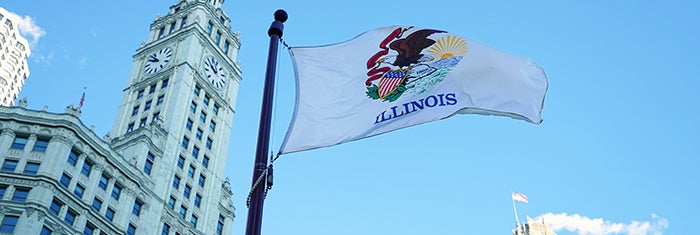 Illinois Remains in the Top Five for Religious Liberty
Although Illinois has a reputation for being left leaning, it has consistently been a leader in defending religious liberty. For the past four years, it has remained in the top five of our Religious Liberty in the States index.
This year it ranked 5th and scored 70.4% on the index’s 20 safeguards. Illinois retains a broad base of protections, including conscience protections across health care, clergy-penitent privilege, and religious exemptions in schools.
Illinois’ continued top-five ranking highlights the strength and durability of its religious liberty protections. While other states have recently added new safeguards, Illinois continues to benefit from a strong legal foundation that protects religious exercise across many areas of everyday life.
There’s also an opportunity for Illinois to build on that success. Strengthening protections for houses of worship during emergencies and expanding certain conscience protections could make an already strong framework even stronger. With a few targeted improvements, Illinois could continue leading the way on religious freedom—and potentially reclaim the nation’s top spot.
Want to see where your state ranks? Check out the state rankings here.
Leading The Conversation | First Liberty in the News
Ten Commandments Belong in Texas Schools and The Supreme Court Can Protect Them – President, CEO & Chief Counsel Kelly Shackelford in FOX News
CA parents Ask Scotus to Stop state Religious Discrimination Against Homeschooling – Counsel Kayla Toney on Heartlander News
Podcast | State of Religious Freedom –– The Center for Religion, Culture & Democracy Senior Fellow Mark David Hall on The Constitution Study
Lecture | The Wealth of Nations at 250 – The Center for Religion, Culture & Democracy Executive Director Jordan Ballor & Research Fellow Paul Mueller on The Sower

The Tension Between Socialism and Religious Liberty
by Hunter Baker, J.D., Ph.D., Senior Fellow for Center for Religion, Culture & Democracy
With victories and occasional near misses all over the electoral map of the United States, socialism is making a post-Cold War comeback. New York City, the center of world capitalism and financial markets, now has a socialist mayor. Elsewhere in the U.S., other socialists vie for major offices and may soon occupy several of them. If a Rip van Winkle had fallen asleep around 1991 and then awakened in 2026, he would be completely shocked to see the political currency of socialism a few decades after the fall of the Soviet Union.
The debate over socialism has always been economic at the root. Socialists have disputed the validity of the idea of private property and have generally believed that the people (via the state) should own the means of production. Today’s socialists are somewhat chastened by past failures and now mostly focus on plans of redistribution rather than public ownership. The big questions have generally revolved around whether socialism can deliver the same kinds of economic output at which capitalism has excelled.
But something else is extremely important and is all too often disregarded. While the dollars, cents, and per capita GDP angles have dominated the discussion, there are reasons to think about a more holistic impact of government control of the economy.
In his classic text Capitalism and Freedom, the Nobel Prize winner Milton Friedman noted that while you could buy almost any publication you might want in a New York City newsstand, the same was simply not true in Moscow. You could buy Pravda and The Daily Worker in Manhattan, but not The Wall Street Journal on the other side of the Iron Curtain. His point was that the Soviet control of the economy ended up leading to control of the market of ideas and the media, as well.
The totalitarian governments of the 20th century (and now the China and North Korea governments) of the 21st have total economic control and exercise authority over the rest of the spectrum of human freedom with few scruples. While North Korea’s control is more obviously blunt and brutal, it is simply true that China knocks over churches when it suits the government to show them who is in control.
But is all of this too extreme? Is it fair to compare American socialists concerned with the cost of living and economic fairness to totalitarians who repress believers in shocking ways? It may actually be less a matter of intent than one of simple social dynamics. Big government impacts religious liberty (and other rights).
First Amendment religious liberty claims have been far more common in the modern era because as government grows, it increasingly interferes with private lives because of its own priorities. Not many would have realized that the Affordable Care Act would lead to a major religious liberty crisis, but the Health and Human Services Department subsequently issued a mandate for employers to provide birth control and abortifacient drugs as part of their health care plans. The result was a clash in the courts that religious institutions (public and private) survived (thanks to the Religious Freedom Restoration Act).
We need to take into account that a government that thoroughly controls the economy and the people and organizations that operate within it is likely to control everything else. In The Road to Serfdom, Friedrich Hayek observed that the economy is the means virtually all of us use to accomplish our ends.
If the government increasingly dominates the economy (and this is clearly the ambition of socialists), then it is a near certainty it will increasingly clash with the convictions of believers. To some extent, liberty is indivisible. We may confidently tear down economic liberty only to discover that religious liberty is not far behind.
Editors’ Picks | Stories Around the Nation
Opinion | Blanche’s Justice Department Has Finally Put Parents’ Rights Ahead Of Abortionists – The Hill
Massachusetts High Court Blocks City from Displaying Catholic Saint Statues Honoring First Responders – New York Post
Southwest Ends Religious Liberty Sanction with New Internal Memo – Bloomberg Law
Virginia’s ‘Religious Test’ for College Students Is Unconstitutional – National Review
Trump Names Nine New Judicial Nominees As November Midterms Loom – Reuters