Arizonan Files Federal Lawsuit
After Gospel Banned from Christmas Festival
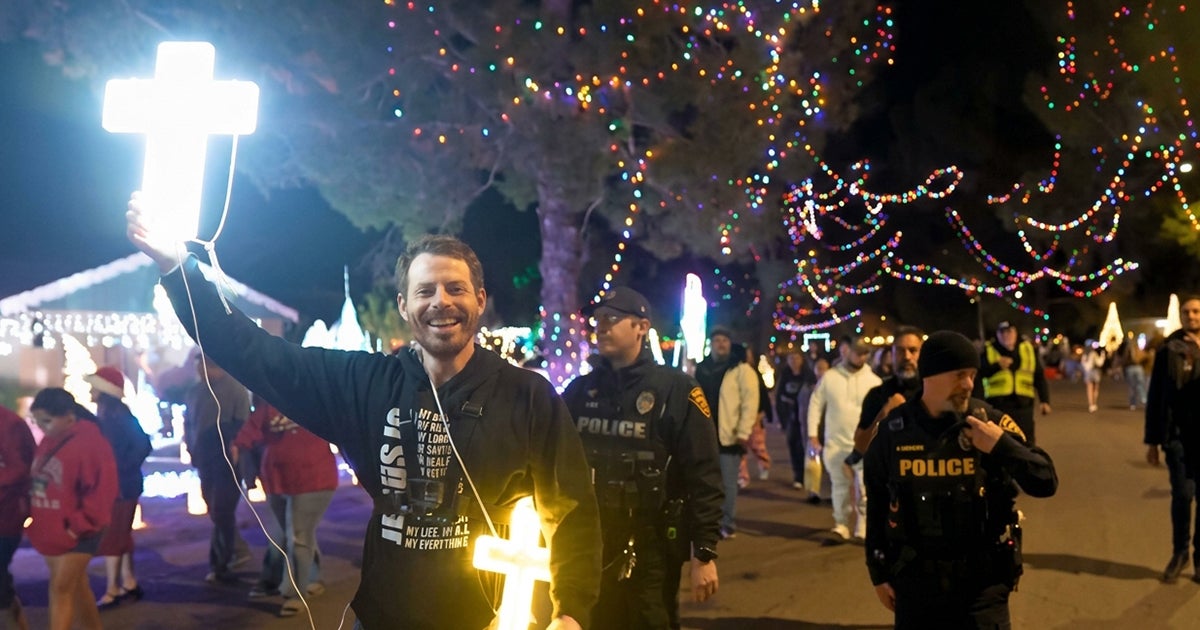
Police threatened to arrest David Hoffman for sharing his faith at an Arizona Christmas festival.
Last December, David attended the Winterhaven Festival of Lights in Tucson to share his faith. The festival was held on city streets, open to the public, and free of charge. Hoffman handed out Gospel literature and had conversations about his Christian faith with anyone willing to listen.
Citing a policy prohibiting “political, religious, or commercial materials or messaging,” city police threatened to arrest him unless he moved to a “Designated Space for Peaceful Messaging and Literature Distribution” located on the outskirts of the festival.
At one point, Hoffman asked whether he could respond to someone who approached him and asked, “What would I do if I am lost?” He was told he could only hold that conversation “outside the perimeter.”
Fearing arrest, Hoffman left voluntarily. But now, he wants to resume sharing his faith at the Winterhaven Festival, including the one this December.
We filed a federal lawsuit this week to ensure that David—and all residents—can share their beliefs in public, as the Constitution guarantees.
“A public street festival is just that,” said First Liberty Senior Counsel Nate Kellum, “a public space where citizens can visit, walk around, and converse with each other about different ideas. The government cannot ban only religious messages.”
Supreme Court Declines to Hear Firefighters’ Case
On Monday, the U.S. Supreme Court declined to hear our case on behalf of eight firefighters in Washington state who were punished and put on unpaid leave for requesting religious accommodations.
This leaves in place a ruling by the 9th U.S. Circuit Court of Appeals that held the fire department did not violate the law when it refused to accommodate the firefighters’ religious beliefs.
“Washington can celebrate that it has taken away the religious liberty rights of our clients,” said First Liberty Senior Counsel Cliff Martin.
Even though this is the end of the road for this case, First Liberty’s work is far from finished.
Among the multiple cases we are fighting involving the rights of American employees—cases that can ensure our clients and millions of Americans don’t have to choose between their faith and their livelihood:
“Government officials should take notice that we will always fight for employees of faith to have equal opportunities in the workplace,” Martin added. “First Liberty will fight until every employee has access to religious accommodations.”
100+ Briefs Filed in Support of First Liberty’s Supreme Court Cases
The U.S. Supreme Court is back in session. The justices are also deliberating which cases to take in the months ahead.
They have already agreed to hear two of ours:
Right now, First Liberty also has a record number of requests pending. We’re waiting for a response on seven, with more on the way.
We’ve also received a massive outpouring of support from all over the country. More than 100 other allies and government officials filed friend-of-the-court briefs supporting our clients.
This broad support underscores how vital every one of these legal battles is for religious liberty. These could impact the freedoms of every American—from students’ rights, to parental rights, the right to seek relief in court for constitutional violations, the rights of houses of worship to be treated fairly, and the freedom to choose the best education for our children.
Taking a case to the Supreme Court requires tremendous resources—but we never send our clients a bill, thanks to our faithful supporters.
Your gift today will help fuel First Liberty’s efforts, helping our legal team fight at the highest level—and pursue victories that can protect religious freedom for decades to come.
Leading The Conversation
Supreme Court Prayer Grotto Case Could Impact ‘Every Single Zoning Law’ in America, Attorney Says – Senior Counsel Ryan Gardner | Fox News
Podcast | Virginia Should Not Make Students Choose Between Faith and Financial Aid – Volunteer Attorney Steve Fitschen | The Hill
The Death of Religion Is Greatly Exaggerated – Center for Religion, Culture & Democracy Director of Education & Engagement Stephen Presley | Religion & Liberty Online
The Patron Saint of Freedom – Center for Religion, Culture & Democracy Fellow James Patterson | Law & Liberty
 How the Supreme Court Works
by Jordan Lorence, Senior Counsel
Early in the Supreme Court’s new term, this is already shaping up to be a significant year for First Liberty Institute. The justices have already granted review in two FLI cases: International Partners for Ethical Care v. Ferguson, involving a challenge to a Washington state law limiting parents’ access to information about their children who run away seeking gender “change” treatment, and Missionaries of Saint John the Baptist v. Frederic, asking whether Kentucky courts misapplied a federal religious liberty law to allow local residents to prohibit a Catholic church from building a shrine on its own property. Let’s pull back the thick burgundy curtains of the Supreme Court to see how it operates.
The Supreme Court term begins on the first Monday of October.
The Supreme Court’s annual term begins the first Monday in October. The opening ceremonies are followed by the first oral argument. This year, the nine justices began by hearing Suncor Energy v. City of Boulder, Colorado, about whether federal law or the U.S. Constitution prohibit local governments or states from suing oil companies under state tort laws for the interstate and international effects of global warming. The justices will hear oral arguments from October through the end of April 2027. They will announce decisions in all the cases they hear by the end of June 2027.
When will the Supreme Court hear oral arguments in FLI’s two cases?
The Supreme Court will hear oral argument in IPEC v. Ferguson on Monday, Dec. 7. The Supreme Court has not yet set an oral argument date for Missionaries of St. John the Baptist, but it will likely be in mid-January 2027. You can listen to the oral arguments live starting at 10:00 am Eastern Time on the Supreme Court website, supremecourt.gov.
The Supreme Court will likely hear about 65 cases this term.
The Supreme Court receives about 5000-7000 cases a year seeking review. In the 2025 term which just ended, the Supreme Court granted review in 74 cases, heard oral arguments in 58, and issued 67 opinions. That means the Supreme Court took about 1% of the cases requesting review. The fact that the Supreme Court has already granted review in two First Liberty cases this term, with more pending FLI cases it could take, is a significant achievement, and only possible with God’s favor.
Attorneys prepare for oral arguments by lots of study and “moot courts.”
The attorneys who will argue the cases before the justices spend many hours studying the briefs, poring over the evidence in the record and doing practice oral argument rounds with attorneys who play the roles of the justices and pepper them with questions. These moot courts help the oral advocate identify difficult questions the justices might ask and help the attorney craft solid answers in response. The actual oral argument will last anywhere from 1½ to 3 hours, depending on how many questions the justices ask. During COVID, the Supreme Court developed a new, longer procedure for conducting oral arguments to ensure that each of the nine justices gets to ask all of the questions he or she wants.
After the oral arguments, the justices vote on the case in a private conference.
A few days after the oral arguments, the nine justices meet in a private conference with no other people present to decide each case they have recently heard. The Chief Justice votes first, and the other eight then vote in descending seniority (most senior justice to least senior justice). If the Chief Justice is in the majority, he determines who will write the majority opinion, and he could select himself. If the Chief Justice is not in the majority, the most senior justice in the majority assigns the majority opinion.
The justices then spend several months working on their opinions.
The justice writing the majority opinion will take several months to circulate a draft to the other justices. If this is a case in which all nine justices agree with the result, which happens many times each year, the process moves quickly and the Court could announce an opinion as soon as one month after the oral argument in that case. If the justices are divided on how to decide the case, then the opinion writing takes longer, because the Court has to wait until justices writing concurring or dissenting opinions complete their opinions to release together with the majority opinion. That means the release of the opinion waits for the slowest writers.
We don’t know when the Supreme Court will release a particular opinion. We only know it will be before the end of June 2027.
The Court will usually say that it will have opinions to announce on a particular day, but it will not say in advance which particular decisions it will announce. The justices announce decisions in reverse seniority. That means, for example, that if the Court is announcing three decisions on a given day, the justice with the least seniority of the three reads a short summary of his or her opinion first, then the next senior justice, and the most senior justice will go last announcing a decision.
The Chief Justice, when he has an opinion to announce, always goes last as the most senior justice, even if it is his first year serving as Chief Justice. People cram into the courtroom waiting to see the announcements of opinions, because they might hear the announcement of a historic decision. If the case is important, a justice may read a summary of his or her dissenting opinion from the bench. That adds to the air of high drama when the Court announces a major decision. What we do know for sure is that the Supreme Court will issue opinions in First Liberty’s two cases before the end of June, when the justices adjourn for their summer recess.
Editors’ Picks
Catholic Schools, Banned Rifles And ‘Climate Lawfare’: Blockbuster Fights Await Supreme Court – Fox News
Amish Families Weigh Their Futures as Vaccine Fight Continues in New York – Epoch Times
Faith and Family on the Docket – WORLD Opinions
5 Cases to Watch at the Supreme Court This Term – The National Catholic Register
Hegseth Creates Office of Religious Affairs with Direct Line to Chaplains – The Washington Times
Bill Proposed to Protect Ministry Students from Losing Federal Funding – WORLD Opinions