by Jorge Gomez & Jayla Ward• 5 minutes
Today, January 16, is National Religious Freedom Day. It celebrates our First Freedom and the incredible blessing to live in country where people of all faiths can freely and peacefully live according to their religious beliefs.
As America prepares to celebrate 250 years of independence this July, National Religious Freedom Day is an opportunity to commemorate our history and religious heritage.
Faith and religious freedom are—and have always been—at the center of our country. The right to openly live out our faith is a defining part of America and why freedom has flourished for more than two centuries.
We see this in the first settlers who came to the New World seeking religious liberty. We see it in the Founders, who ensured that religious freedom was the very first right in the Bill of Rights. We see it on this National Religious Freedom Day, a special occasion created to remember our most sacred liberty and the fruits that flow from it.
Religious liberty is the building block of a free society. America’s Founders listed it as the first freedom in the first clause of the First Amendment. Why? Because without the freedom to worship and live out our faith, all other liberties—civil, economic and social—come crumbling down. We need that First Freedom to be truly—and fully—free.
Celebrating America’s History: The “First Draft” of the First Amendment
Why is National Religious Freedom Day celebrated on January 16?
Because on that day in 1786, our nation’s Founders unveiled the “first draft” of what we now call the First Amendment.
After the Colonies declared their independence from Britain, the Commonwealth of Virginia decided to pass laws that would protect the fundamental rights of its citizens.
In 1786, Virginia General Assembly enacted the Virginia Statute for Religious Freedom, landmark legislation safeguarding the freedom of conscience. The bill was originally drafted by Thomas Jefferson and was passed primarily through the efforts of James Madison while Jefferson was serving as the U.S. Minister to France.
The statute affirmed “all men shall be free to profess, and…maintain their opinions in matters of religion, and that the same shall in no way diminish, enlarge, or affect their civil capacities.”
Because the freedom of conscience is sacred, “all attempts to influence it by temporal punishment or burthens, or by civil incapacitations…and are a departure from the plan of the Holy author of our religion, who being Lord both of body and mind, yet chose not to propagate it by coercions on either.”
In other words, the Statute emphasized that our rights come from God, not government—giving citizens the freedom to choose a religion or none at all. What’s more, it acknowledged that government could not compel anyone to attend or financially support a specific church.
Does all this sound familiar?
It should, because the principles espoused in that document served as an inspiration for the drafting of the First Amendment, which affirms the right of all Americans to live out their faith without the government interfering or coercing their beliefs.
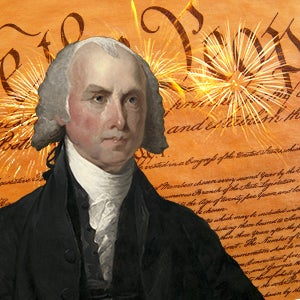
In 1787, a convention met in Virginia to consider ratifying the U.S. Constitution. Madison was the person most instrumental in writing the new Constitution. He drafted the Bill of Rights, including what was to become the First Amendment. In fact, Madison’s original draft included an ambitious protection of religious liberty, which stated, “The civil rights of none shall be abridged on account of religious belief or worship…nor shall the full and equal rights of conscience be in any manner, or on any pretext, infringed.”
Congress largely relied on Madison’s original draft, and the states subsequently ratified two principles — “no establishment” and “free exercise” — that protect one freedom: religious freedom as a fundamental, inalienable right for every person.
The final version of the First Amendment that we know today—”Congress shall make no law respecting an establishment of religion, or prohibiting the free exercise thereof”—clearly bears the stamp of what was written in the Virginia Statute.
Our Greatest Strength: Religious Freedom Makes America Exceptional
Federal recognition of Religious Freedom Day began with President George H. W. Bush in 1993. Each president since then has issued a new proclamation every year since to commemorate the many faiths that make up our country and calling upon all Americans to go forth to share their faith and exercise their religious liberty rights in their homes, schools and houses of worship.
“Americans are a deeply religious people, and our right to worship as we choose, to follow our own personal beliefs, is the source of much of our Nation’s strength.” –President Bill Clinton, 1999
Religious liberty is a common denominator that brings all Americans together, especially in this polarizing time for our nation. Religious freedom reminds us of what we have in common, rather than what divides us. It puts in perspective how blessed we are to have the Constitution, a document that expressly protects our right to live in accordance with our beliefs and convictions.
National Religious Freedom Day is a call to action, when you and millions of other Americans can live out your faith knowing that you not only have the constitutional right to do so, but that you have First Liberty—the nation’s leading religious liberty law firm— in your corner.
From all of us at First Liberty, happy National Religious Freedom Day!



 |
|

|