Rightfully Restored: Religious Service Members Are Being Made Whole
During the COVID-19 pandemic, thousands of service members were mistreated and punished for requesting religious accommodations to the military’s vaccine mandate. First Liberty’s own Mike Berry—Executive Director of External Affairs and Senior Counsel—was among those affected by the previous administration’s punitive policy.
After serving 19 years in the Marine Corps, Mike was unceremoniously placed on inactive status without notice. He was even told by a senior Marine Corps official that he had “interests adverse to the United States.” His service record was jeopardized, as was his health insurance and even his retirement.
But we have good news! Thanks to the victory in our Navy SEALs case, Mike and other service members are being compensated and made whole. The Department of War is clearing their records and rightfully restoring our service members’ hard-earned benefits.
Texas County is Now Rocking a Ten Commandments Monument
A beautiful Ten Commandments monument is now on display at the historic county courthouse in Rockwall, Texas.
“We applaud the Commissioners Court for taking this bold step for religious liberty,” said First Liberty attorney Mike Berry, who spoke at the unveiling ceremony. “Displaying The Ten Commandments on public grounds in Texas is consistent with Supreme Court decisions that recognize our religious heritage and the best of the nation’s history and traditions.”
Rockwall County is now the second in the Lone Star State to take this monumental step to restore faith and religious freedom back where they belong. In January, Tarrant County unveiled a Ten Commandments monument at its courthouse.
The landmark Supreme Court rulings in our Coach Kennedy and Bladensburg Peace Cross cases changed the legal test for religious expression on public property. The court declared that symbols, displays and practices that align with our nation’s history and tradition are presumptively constitutional.
Rockwall’s Ten Commandments display is the latest fruit of these Supreme Court victories—as well as the effort of local leaders and everyday Americans who want to celebrate America’s history.
In Case You Missed It:
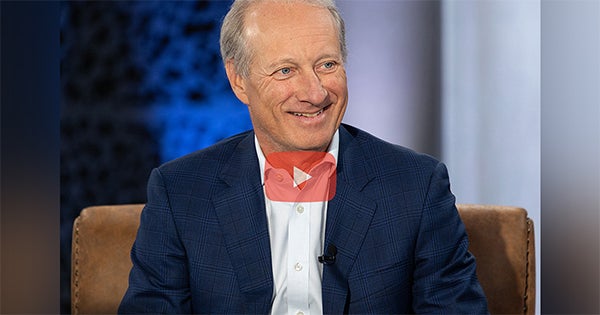
Kelly Shackelford on Trinity Broadcast Network
First Liberty President & CEO Kelly Shackelford recently appeared as a special guest on TBN’s Praise with Matt & Laurie Crouch, discussing the legal battle for religious freedom in America.
Click below and sign up for free to access Kelly’s full interview on TBN:
Leading The Conversation | First Liberty in the News
Memorial Day and the Oft-Forgotten Dead – Executive Vice President & Chief Legacy Officer David Holmes in The Daily Signal
Video | One Nation Under God? America 250: Freedom of Religion at Our Country’s Founding and Now – Center for Religion, Culture & Democracy Senior Research Fellow Mark David Hall in Religion News Service
God and the Declaration – Center for Religion, Culture & Democracy Fellow James M. Patterson in Civitas Institute
A Sincere Salute – Center for Religion, Culture & Democracy Senior Fellow John D. Wilsey in WORLD
Free Trade and The Rule of Law – Center for Religion, Culture & Democracy Research Fellow Paul D. Mueller on Acton Institute
 The Close Relationship Between Free Speech and Religious Liberty
by Josh Blackman, Centennial Chair of Constitutional Law at the South Texas College of Law Houston
Imagine the government made it a crime to say “Merry Christmas” on public streets, but people could still offer non-religious season’s greetings. This war on Christmas would infringe the First Amendment three times over. First, the law prohibits a message based on its content, a violation of the Freedom of Speech Clause. Second, the law targets the sincerely held religious beliefs of only one faith—Christians—in violation of the Free Exercise of Religion Clause. And third, the law favors secularism over faith, in violation of the Establishment Clause.
This simple hypothetical illustrates the close relationship between the freedom of speech and religious liberty. Indeed, many of the Supreme Court’s most important religious decisions arose in the context of free speech disputes. Let’s consider several landmark cases.
During the early 20th century, states required school children to salute the flag while reciting the Pledge of Allegiance. For most Americans, this act of patriotism would be welcome. But for Jehovah’s Witnesses, saluting a flag amounts to worshiping a graven image. They could no more recite the pledge than they could pray to an idol of Zeus. Three children of this faith challenged West Virginia’s mandatory salute. The trial court found the law violated their free exercise of religion.
On appeal, the Supreme Court found the law violated the freedom of speech. In West Virginia v. Barnette (1943), Justice Robert H. Jackson declared, “If there is any fixed star in our constitutional constellation, it is that no official, high or petty, can prescribe what shall be orthodox in politics, nationalism, religion, or other matters of opinion or force citizens to confess by word or act their faith therein.” Barnette is a landmark free speech case, but provides critical protections for religious liberty.
The Supreme Court seemed more comfortable resolving this case on free speech grounds, rather than religious liberty grounds. Why? My theory is that ruling on the former grounds protects people of all faiths, or no faith at all. By contrast, a ruling based on the religion clauses would only affect certain people of faith, and leave others without legal protection. In either event, the Jehovah’s Witness children received the accommodation they needed.
Despite Justice Jackson’s clear understanding of freedom, governments continue to trample on these fundamental rights. Colorado, in particular, sadly has not learned the lesson from Barnette. Lori Smith designed websites. But due to her sincerely held Christian beliefs, she refused to build a website for a same-sex wedding. Colorado, however, would have forced her to engage in this artistic act in violation of her conscience. In 303 Creative LLC v. Elenis (2023), the Supreme Court held that such compelled speech violated the Free Speech Clause of the First Amendment. Justice Neil Gorsuch’s majority opinion, citing Barnette, ruled that “the government may not compel a person to speak its own preferred messages.”
Colorado was also prepared to force Jack Phillips, a Christian baker, to design a cake for a same-sex wedding. In Masterpiece Cakeshop v. Colorado Civil Rights Commission (2018), the Supreme Court found that the state unconstitutionally targeted Phillips for his traditional religious beliefs. In another case, Colorado allowed mental health professionals to “transition” minors to another sex, but prohibited them from counseling children to be comfortable in their own bodies. Chiles v. Salazar (2026) ruled that a Christian therapist had the right to engage in talk therapy, consistent with her own beliefs.
One final case brought by the First Liberty Institute is especially important. Coach Joe Kennedy would pray at the 50-yard line after high school football games. The school barred Coach Kennedy from praying, fearful that students would feel coerced to pray with him. Kennedy v. Bremerton School District (2022) ruled that the government violated Coach Kennedy’s speech rights. Prayer is simply a form of speech, much like wishing someone a Merry Christmas. Justice Neil Gorsuch further determined that merely exposing students to prayer did not offend the Establishment Clause. In doing so, the Court overruled the dreaded Lemon test, which barred most public displays of religion.
These cases demonstrate the close linkage between the freedom of speech and religious liberty. We should be grateful the Framers recognized this connection and tied these first liberties together in the First Amendment.
— — —
Josh Blackman is a national thought leader on constitutional law and the United States Supreme Court. He also serves as a professor at the South Texas College of Law Houston. He holds the Centennial Chair of Constitutional Law.
Editors’ Picks | Stories Around the Nation
Video | Court Packing: A Threat to the Supreme Court’s Legitimacy – U.S. House Judiciary Committee
Jim Jordan: Keep Supreme Court at 9 Justices – Newsmax
Opinion | Why Trump’s Revival Of HHS Conscience Division Is A Win For Religious Freedom – The Christian Post
EEOC Orders Compensation for Feds Denied Religious Exemptions to COVID-19 Vaccine – Federal News Network
Religious Foster Parents Cheer Washington State Legal Win – WORLD
Louisiana Enacts New Laws Protecting Churches FROM Service Disruptions – Christianity Daily